Friday, June 17, 2011

Live At Last - Black Country Communion in Indy

Black Country Communion took Indianapolis by storm last night, delivering a fantastic live offering of a host of tunes from the band's two albums, and a couple of classic nuggets. They sound like a mature band that has been gigging for years, not just a few shows. Glenn Hughes and Joe Bonamassa may be leading the charge from out front, but drummer Jason Bonham, and keyboardist Derek Sherinian are clearly two facets of this hard rock diamond.

The Voice of Rock, Glenn Hughes sings the lion's share of the material, while Bonamassa sings a few tunes and supplies an endless barrage of cutting edge rock guitar work. This is a super-group full of love and respect - there are no apparent issues of ego, or one-upmanship. When Bonamassa performs his solo classic, The Ballad of John Henry, Hughes works the audience magnificently, and sings every word of the song as he roams, smiling beatifically at the young guitar star. The entire band looks as if they are having a blast, and having collectively played with an amazing array of rock and roll royalty, they know they are a very powerful machine at work.

Derek Sherinian may be the least well known member of BCC to the casual listener or fan. The keyboardist has 10 albums of his own under his belt, and a resume that includes Dream Theater, Billy Idol, Alice Cooper, KISS, Al DiMeola, and practically every major rock guitarist of the last 20 years. On BCC's first record, many fans complained that the keyboards were under-utilized, and under mixed. This has been more than rectified on the band's new album, which is out this week and garnering near unanimous rave reviews.  The record heavily features Sherinian's awesome skills at both playing and arranging. On stage, Sherinian is as loud as Joe and Glenn, and actually has the only unaccompanied solo of the show, which was loud, dynamic, and allowed Sherinian to flex his musical muscle.

The show kicked off with the band's self titled opener, Black Country. Glenn Hughes's performance gave great credence to my habit of late, that of describing him as "the last rock star." I'm hard pressed to name another 70s rocker who is still in as fine a voice, or as energetic on stage. In an age where many have lost some high range, and a step or two on the boards, Hughes is still hitting every note of the 1973 Deep Purple classic track, Burn. Watching him run the stage is like viewing someone ice skating on a cliff. Before the show, Hughes had this to say:

"On the stage, I am fearless. This isn't arrogance, or ego, I'm like anyone else - I have fears all day long. But they disappear the moment I walk on stage."

Fearless indeed! The man never once retreats from a high note, or a low growl - the dynamics of his vocals go in an instant from a tender whisper to an impassioned wail. In this band, Hughes has chosen to keep the focal point on the songs, and the band. His incredible histrionics are kept to a minimum, and his melodicism is maximized. Even the hardest rockers in the set have their fair share of melodic beauty.

Guitarist Joe Bonamassa continues to evolve before the public eye. In his role here as axe star and occasional vocalist, the six stringer seems to relish the role of full time rock guitar hero. His solos are incendiary and masterful in their technical wizardry, but for me, where he is shining the most is in his sophisticated rhythm work, his single string song signatures, and his writing. His composition, The Battle For Hadrian's Wall, off the band's new album is a great example, as Joe switches seamlessly between the necks of his custom Music Man Doubleneck 6/12. This song has it all, and a great vocal from Joe as well.

On The Ballad of John Henry, the tune Total Guitar Magazine named as one of the ten best riffs of the last decade, Bonamassa takes a solo that is completely unhinged, as he effortlessly spits out volleys of rapid fire modal forays that end with howling bends of the lower strings, before he takes on his theramin with what I can only describe as heavy metal bliss. His aggression and verve even made the guitarist himself smile,  as his wizardry is thrown around the room in stereo by long time tour manager, and extraordinary live sound-man, Warren Cracknell. Cracknell has been expertly mixing Bonamassa shows for years, but now he's dealing with the sophisticated effects required by the new band's records, and the added burden of starting fresh each night on a new P.A. - far from the luxury of having his custom designed solo Bonamassa rig. The mix was great - vocals were crystal clear, the keyboards were prominent in the mix, and of course, the guitars sounded like a aural text-book of classic tube amp tones.

Before the show, Bonamassa kindly took the time to carefully walk me through his self designed rig (completely re-tooled for BCC). Then, after a tour of his guitar selection, he took apart his newly acquired 1959 Gibson Les Paul Junior double cut to remedy a noisy potentiometer. Joe knows his rig inside out, and spends endless hours making his magic seem effortless. He's joined in his mission for tone by long-time stage crew member Colin Moody, who has now assumed the role of guitar tech to the chief. You can see the confidence Bonamassa has in Moody, and they even agree to work together the next day installing a Hip Shot Bass Xtender machine head on Hughes's new acquired Rickenbacker 4001 bass (in a stunning azureglo blue finish). Bonamassa also talks Glenn into trying a Way Huge overdrive pedal with his bass rig - this guy is all about the never ending search for killer tones.

Some of the shows best moments are when the seasoned bassist jousts with the blues rock icon (that's Brick to the band). Hughes prods the guitarist to ever dizzying heights of daring do, and Bonamassa rises to the occasion - and on several of these occasions Hughes looks both pleased and amused by his cohort. The magic between these two is as palpable as the respect that they both confide when the other is not around. These guys fairly gush about the pleasure they are deriving from this partnership, hardly the hallmark of super-groups past.

Jason Bonham does not dodge Bonamassa and Hughes's effusive praise, either. The axeman reckons that the drum gods are smiling down upon him - he has the thunderous Tal Bergman in his solo band, and now has Bonham playing the best drums of his career in BCC. He drives the band mightily from behind his see-through yellow DW drum kit, and acts as a constant cheerleader for the band. Smiles are not off the faces of this bunch for long - they know what they are, and how good they sound. All ready, arrangements are stretching out as the band begins to gel.

The evening ended with a two song encore. The Man In The Middle is the band's lead video/single, and you couldn't ask for a funkier driving rocker. This is a staccato rhythm machine, and again you get a big sweet, melodic hook of the sort that Hughes writes so effortlessly. Once more, the enthusiastic crowd goes wild. The night then comes full circle as Bonamassa rips through the intro of the aforementioned Deep Purple classic, Burn, and the audience is again off their feet, singing, screaming, and thrusting fists. Bonamassa improvises a hot solo, and then proceeds to feed the adoring crowd Blackmore's famed arpeggios,as Sherinian contributes a huge slice of Hammond B3, also nailing the tone and feel of the Cal Jam classic. Hughes is brilliant right to the very end. I can't imagine a better ending to a fantastic show. It is scary to think what these guys will sound like in a month at High Voltage - England, prepare to be invaded.

There are other highlights throughout the show, with tunes such as Cold, or One Last Soul that are sure to become BCC classics, but I'll let you discover them for yourself. A wealth of quality clips have shown up on Youtube this week, and should sufficiently wet your whistles.

Everyone in Black Country Communion is at the top of their game, and with two excellent albums under their belt they are primed to make the world of hard rock their own. Producer Kevin Shirley was right, "This band is viral."

This was one of the best hard rock shows I have ever seen, and judging from the enthusiastic response from the packed house, I'm not alone in that opinion. The band still has three shows in the Eastern US before heading off to 25 shows in Europe, including that prestigious High Voltage Festival in London, England on July 24th. God bless Black Country Communion.

Live at last. I first wrote about Black Country Communion before a note had been recorded. I spoke with Glenn Hughes before a single note had been sung. I reviewed the first record first, and am now more convinced than ever that indeed BCC may well be the most exciting and important thing to happen to real rock music in the last twenty years.

All photos provided by Libby Sokolowski.

Tuesday, June 7, 2011

Black Country Communion 2 - The Confirmation

Black Country Communion is currently the best classic hard rock band on the planet. The band's second album, simply titled 2, is significantly better than their eponymous debut, and I believe I called that disc, "the best debut record by a hard rock band in the last 20 years." The nice thing is that I am right.

Glenn Hughes has risen from the ashes, and in the process built an amazing band which now possesses enough new material to headline their first tour, which begins next week. BCC is a band comprised of four of the best players in the world, but make no mistake, Field Commander Hughes is leading the charge on this one. He wrote most of this record, sings the lion's share of the tunes, and has made the record of the year.

I really hope this does not greatly aggrieve the fans of Joe Bonamassa. Joe has just finished a solo tour promoting the best record of his career, and his playing on this LP, as it is on Dust Bowl, truly amazing. He is becoming more of his own man with each release, and thus continues his ascent. Joe's fans are rather rabid in their defense of all things Bonamassa, to the point that I feel this paragraph necessary. He's growing, and I really hope his fans see not just his love of the hard rock genre, but also the emergence of a unique voice that is straddling the lines between blues, rock, and what I am guessing is a new outlook at life itself from our young guitar hero. This trip is bigger than Glenn Hughes or Joe Bonamassa, though.

Jason Bonham, I have never envied the path you walk. You follow in the footsteps of the greatest hard rock drummer in history, and whose imprint on rock is almost immeasurable. Kevin Shirley recorded the drums on this record as nakedly as possible from a modern production standpoint. No gates, no samples, just live drums. You far exceed my expectations, which were not small. Your playing on the first album was tremendous, but nothing quite like your performance here. Where the first record was technically incredible, this time out you are more subtle, more musical, and it is obvious that you brought much more influence, and many more ideas to the table this time out.

Keyboardist Derek Sherinian is all over this record, much more to the forefront, and fans will now understand what all the hub-bub is about. Black Country Communion's debut showed little of Sherinian's brilliant playing and arranging skills, but you must understand that that record was recorded in a matter of days, and by a band which hadn't worked together previously - hence the lack of more integrated or complex keyboard arrangements. Not so on 2. Sherinian is heavily featured on every cut and solos mightily on several tracks which I will discuss in greater detail shortly.

Black Country Communion is a four piece band with a fifth member. Producer Kevin Shirley literally started the band, and has been an integral part of every move the band has thus far made. Shirley shares eight co-writing credits on this album, close to what George Martin should have received from The Beatles. Every interview I have read by the group, or the producer talks of blood being spilled, and the murder of many of every member's creative darlings. These are not small egos we are dealing with here, these are four of the most recorded musicians in their field, and a producer who has mixed, mastered, and engineered Led Zeppelin, Aerosmith, The Black Crowes, Iron Maiden, and Journey. Opinions are bound to be strong when espoused by such pros, and Shirley has succeeded in making this sound like a pure act of synergy. He is unquestionably the best hard rock producer working.

As I waited patiently for the delivery of the record to my doorstep, I wondered what my reaction would be upon the first listen. Glenn Hughes has repeatedly stated that this was the one. He is tremendously proud, enthusiastic, and vocal about the amount of time, energy, love, and passion he put into its writing. Still, I wondered how it would compare to the first - would it rise to that very high standard, and match the magic the band created on their first sojourn?

I'm a little embarrassed to have doubted the irrepressible Mr. Hughes. He is a man who is truly walking the walk. No matter how much he pontificates, his performances are still leaving his words in the dust. He is in tremendous voice, his bass playing is spectacular throughout, and his writing keeps getting better and better.

The Outsider kicks it off, and once again a hard charging riff rifles in another great record. Hughes is indeed The Messenger, maybe the last real rock star, or maybe even the first new rock star of the second chapter. He's taken to fully assuming responsibility for his words - he's singing purely in the first person, and it shows in a new born sense that he is telling his story, singing his song. Joe Bonamassa has brought a new voice to the realm of rock riffery. His playing throughout is perfect. Busy, but not obtrusive - he and Hughes are flying down the highway with an amazing drum escort. What I wasn't expecting was the hellacious guitar/keyboard dual in the song's solo section. The pair trade eights, and each pass gets hotter and hotter, when they finally meet in the middle for some unison dueling. It's playing that is reminiscent of the days when Gary Moore faced off with Don Airey. Hughes then takes charge with a throbbing bass line, and Bonham joins in to bring in the final chorus. Wow, what a beginning.

Next up is a sound the likes of which I have not heard since the days when the name Aerosmith still meant something. The Man In The Middle is wonderful. Hughes is singing about a topic which he may know better than anyone, the dangerous path of rock fame, and the peril it holds. Hughes' lyrics have never been this concise, or this close to home, and it makes a huge difference. The passion he brings to the lovely b-section is awe inspiring and ultra melodic - rock ear Nirvana.

Joe Bonamassa brings one to the table next, The Fight For Hadrian's Wall, and it is a further progression of the songwriting skills he has worked so hard to develop. From a Zeppelin-esque intro, the six stringer shows his ever growing vocal talents, and his cohorts provide him with a backing track that is sublime - especially Bonham's extremely creative, and inspired kit work. The drummer is subtle and supportive throughout, bouncing between rhythmic fills and powerful drive. Bonamassa is in great voice, and I can hear the Paul Rodgers comparisons already.

Hughes then takes back the wheel, and Save Me  sounds like it came from a Led Zeppelin rehearsal, which is actually where the original idea was birthed. The riff is supplied by Jason Bonham, salvaged from the aborted attempt at a Zep reunion. For those who will charge the band with coming too close to the spirit and sounds of   Zeppelin and Deep Purple, I can only remind them that this is natural - Bonham is Bonham, Hughes was a huge part of Purple, and Shirley certainly spent a lot of time and energy working with Jimmy Page. I see this more as a logical progression.

Bonamassa's guitar playing is continuing to improve - hard for some to swallow, but Joe is ever growing, and evolving into a more distinctive, and recognizable stylist. I am hearing Joe, and less of his influences with every record he makes. He sounds more like the guitarist in a great band than the hot hired hand that he sounds like on the band's debut - as if he's less concerned with rock histrionics and more concerned with the compositions and his place within them. His playing has never been short of technical wizardry, but now he sounds more like he belongs to the music, and the music belongs to him.

Glenn Hughes wrote Smokestack Woman for Bonamassa to sing, but the guitarist kicked it back to Hughes, who again is startling with his passion, and honesty, as he sings, "it serves me right to suffer, I live in sin." This album may be Hughes's grand confession, prayer, and message of redemption. He's just released his autobiography, and now he seems to be singing it. We've spoken a good deal about his legendary addiction and recovery, and I know of no one who has more completely recovered, and been more totally reborn. At nearly 60, Hughes is in full possession of his tremendous talent and gifts, and is perhaps more driven than any musician I can name.

Faithless is perhaps the most unique tune on the record. This song crosses many roads, and truly sounds like nothing but Black Country Communion. The interplay between the four is inspired, as each member shines gloriously, and in synch. Bonham's drumming has me smiling a huge smile as he explodes in fury, then backs off the accelerator as Bonamassa uncorks the solo of a lifetime - this is knocking at the door of true greatness. He runs the gamut of his vocabulary, and does it in a way that never appears to serve anything but the song. Sherinian is also wonderfully cinematic here, taking this to epic territory.

"I'll cut to the chase. And I've told Joe how I feel about this song. It brings me to tears." That's what Glenn Hughes says about An Ordinary Son, Bonamassa's next turn at singing, and fronting this mighty machine. Once again, we see a writer writing about his inner being, and again we are better for getting to experience this offering. It's not just growth as a singer, writer, and guitarist we are hearing, but perhaps a spiritual awakening dawning upon our young guitar hero. This is very close to Bonamassa's solo song style, but the band is more explosive than on Joe's solo records. Joe's solo band is a great band, but I am not certain they have ever been unleashed like this bunch.

I Can See Your Spirit returns the band to full throttle riff machine, and this is gonna explode when they play it live. The sound of Hughes and Bonamassa playing in unison is a glorious sound, and when Bonamassa goes into Guitar God mode, Hughes plays some acrobatic bass to support his young charge. Next, we have Sherinian attacking his Hammond B3 with dexterity and daring. Yeah, this is gonna flat out rock some theaters.

An ultra-melodic blues tune follows, and one wonders how big the smile is on Gary Moore's face up there in heaven. While this swims in the same sea as Gary's blues, it brings the Hughes stamp of sophistication to the awesome chord changes (maybe a bit Beatle-ish even?), and Bonamassa owns it on this one. He plays from his heart in a way I have not previously detected. Little Secret is indeed, "a storm on the rise."

Hughes revisits his funky past with Crossfire, a sophisticated mid-tempo rocker that features silky smooth vocals, and some more great, and unexpected changes. I'm amazed at how much these guys listen  - what I mean is that you have four virtuosos who never step on one another, instead, they often play their coolest licks under another person's solo. Hughes is an astoundingly solid and inventive bassist, a fact sometimes overshadowed by his amazing vocal talents. He's all over this record with a huge tone, and great chops.

Cold brings the record to its conclusion, and it does so in a most sensational form. This takes me straight back to the great Deep Purple album, Stormbringer, a record that may not have pleased one Ritchie Blackmore, but I found to be an incredible display of instrumental chops and emotion. In the face of Glenn Hughes's tremendous success and activity, it is easy to forget the loss of friends he has suffered, and the price he has paid for his excesses in his past. He has completed this section of the circle - claiming his right to his talent and drive, without the misery of addiction, and plague. He has written, played, and led an incredible band to its next level.

Had this record been recorded and released just after the breakup of Deep Purple, it would have made Black Country Communion one of the world's biggest bands. I see no reason why that result should not occur today.

Black Country Communion 2 is a great record by any score-sheet. This band and their producer have done what I wasn't sure they would, or could - they have literally blown away the record I wrote of so glowingly a year ago. The band starts its first US tour in just days - they are in rehearsal as I type. I will be seeing them in Indianapolis in eight days. I am expecting to be amazed. I roundly, and soundly congratulate Joe Bonamassa, Kevin Shirley, Jason Bonham, Derek Sherinian, and especially Glenn Hughes on the creation of a great band, and another great record.

Thursday, June 2, 2011

Uriah Heep - Into The Wild - Album Review

Uriah Heep's 23rd studio album is the best record the band has released since the days of David Byron and Ken Hensley. Maybe it's even the best record in the band's 41 year history. I can state without hesitation that if this album had seen its release soon after Byron was fired in 1976, the story of the Heep would have been one closer to the legacy of AC/DC. To replace a singer as identifiable as Byron is a tough task, and only AC/DC comes to mind as an example of a band that ever successfully pulled it off.

Into The Wild is a very, very good album. It stands on its own without condition, regardless of when it saw its release. The title tune begins with the Hammond organ tone you always want to hear from a classic British rock band, and the heavily overdriven intro is kicked into gear in fine fashion by stalwart guitarist Mick Box, drummer Russell Gilbrook, and bassist extraordinaire Trevor Bolder. Cool harmonies, a singable chorus, and lead vocalist Bernie Shaw make this a memorable song, not just something attached to a great riff. This is too energetic, too melodic, and too exciting to be coming from a band that's been on the boards for 40 years, but fact is, it is all of this.

Mick Box has been the driving force of Uriah Heep since every guitar player in America went out and bought a Foxx Fuzz/Wah to emulate his tones on such hits as Easy Living, and Stealer. All credit to Box that he never falls back on the easy money and tries to replicate these past glories. Instead, he focuses on crafting well played rock and roll riffs, choosing to explore newer ground, as opposed to plodding through familiar paths. His aggression, fiery attack, and sharp edged tones belie the years, and almost make one blush in their sheer audacity and passion.

I'm Ready is a great example of Box's take on Uriah Heep, 2011. His tone is familiar, yet it's a new tune, and his soloing sounds like the guy who played those old hits, then spent the next 30 years working on his craft, and is continuing to grow. Surrounded by the massive tones provided by keyboardist Phil Lanzon, and the explosive drumming of Gilbrook, Box comes through shining. The tune sounds warmly familiar to any longtime Heep fan, but only in style and tone.

Bernie Shaw has now been fronting Uriah Heep for 25 years. However, he's still seen in the Americas as the new kid. He's kept the band moving forward for decades, and he's made the band his own. His singing has gotten better over the years, a relative rarity amongst aging hard rockers, and even more of a rarity is the fact that his writing has continued to improve - to the point at which every song on this album is a proud addition to the legacy of this long underrated group.

Uriah Heep's stock in trade has always been the keyboard and vocal driven madrigal. Here, Trail of Diamonds takes its place alongside such heralded songs as Sunrise, and July Morning, when suddenly Mick Box tears off a volley of notes that are as Ozzy as anything, before taking the tune down a rockier trail that guarantees a smile from any fan of David Byron. Byron's work was often great, and the band does his memory justice in a manner that surely has David smiling down upon them. This tune is a Heep classic, and maybe even better than its predecessors. The vocals, and melody are truly astounding, and I smile to think of the joy this must bring to the entire band.

Trevor Bolder is best known as the mutton-chopped bassist from David Bowie's Spiders From Mars. He should be better known, as he is  amongst a handful of rock bassists that I consider to be the best in the world. His playing is never less than stellar - his choices are always wonderful, his tone perfect, and he is constantly pushing the envelope with great notes, runs, and fills. After 40 years of stellar service, Bolder is still pushing, never resting on his laurels, or mailing it in. He also contributes a great lead vocal on his tune, Trail of Diamonds.  On every cut, his playing is a jewel. If this was the only place you had to study, you could walk away being a fine bassist.

Nail On The Head starts the album, and if there were still such things, this would be the single. It's very immediate, a straight ahead rocker that if I had to qualify, I'd say it sounds like Billy Squier writing for Deep Purple circa Perfect Strangers, a very cool swagger going on. Again, Mick Box is soloing like man half his age, and shaming most of the fodder that makes up modern rock radio along the way.

Strong choruses are in abundance, and nothing here is more appealing than the unexpected twist of the tale that takes I Can See You, into the land of milk and honey -  as gorgeous a refrain as I've heard in too many years. Excellent writing that is once again familiar, but new.

Keyboardist Phil Lanzon signed up in 1986, and has since been a huge component of the Heep sound. His organ playing is never buried, it's always thrusting aggressively into every mix on the album. He sounds like he's ingested every riff Jon Lord ever laid down, and put his own spin on them along the way. Uriah Heep always featured the Hammond pretty prominently, but Lanzon ratchets it up a good deal, and it is often the main rhythm instrument, allowing Mick Box to play more colorfully. This results in some very exciting verses and fills throughout. Lanzon, like Bolder is a player who is right at the top of his field, yet gets not nearly the attention he deserves.

Ensemble vocals have always been a large factor in the Heep DNA, and they've certainly taken their time here to create a consistently interesting and compelling blend on most every song on Into The Wild. Southern Star is a great sample of the boys doing what great British rock bands have done better than anyone else since the mid '60s.

Fans of melodic AOR will love Believe - I hope the new Journey record can keep up with this platter. If so, 2011 will be the most exciting year for new material in some time. Stylistically every song sounds like it comes from the Heep factory - forged of solid steel, with a large dose of rock and roll heart. The tune is another grand sample of the finest this genre has to offer. It features a huge dollop of wah encrusted licks from the guitar of Mr. Box.

Fear not, Mrs. Gilbrook, I've not forgotten your son. There is no greater angel in the world of rock and roll than a mother whose love allows her son the time and tribulations it takes to become a great drummer. Russell Gilbrook fills huge shoes when he steps into the seat formerly occupied by Lee Kerslake. Lee Kerslake was not just a drummer's drummer, he also contributed to the mighty chorale that made Uriah Heep so unique amongst early metal bands. Gilbrook's work on this disc is simply fantastic. He's busy, his fills are extremely musical, and he drives the band in a most compelling fashion.

Kiss of Freedom closes out the album, and it may be the finest piece on a record full of fine pieces. It has hit single sensibilities, amply demonstrates the superb technical skills of all involved, and fits the definition of epic. Christ, it even modulates, and not in a hokey way, but in a manner most majestic - maybe the hardest trick in the whole rock and roll playbook. If you're not a Bernie Shaw fan by now, my heart breaks for ya. The guy just sang the album of a lifetime.

This may be the finest Uriah Heep record. I know that to state that may be blasphemy to some Heepsters, but I'm pretty sure I'm right on this one.

Regardless of where you wish to place it in the pantheon of Uriah Heep, a listen to Into The Wild will reveal that this is a longstanding band continuing to make great music long after most of their contemporaries have lost their creative way.

Wednesday, June 1, 2011

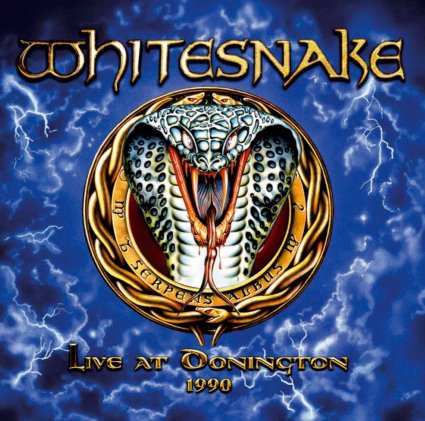
Whitesnake Live At Donington 1990 - Album Review - They Got Too Good

It was the only time I ever saw David Coverdale take pause during a show. He literally froze in his tracks, and stared at the man beside me in the front row. He looked, smiled, and slyly asked, "what the f**k are you doing here?"

The man beside me was my boss at the time, guitar legend Michael Schenker, someone Coverdale obviously hadn't planned on seeing in New Orleans in March of 1990. They exchanged smiles, and David returned to the business of being the best frontman in hard rock, leading a band equipped with terrifying horsepower. Neither Coverdale, nor Schenker realized that their time was about up - they both had records high on the charts, but were about to be put to pasture by an out of tune, bitter band from the Northwest - Nirvana. They had made the fatal mistake, the mistake that put hard rock and metal on the shelf for the next decade - They got too good.

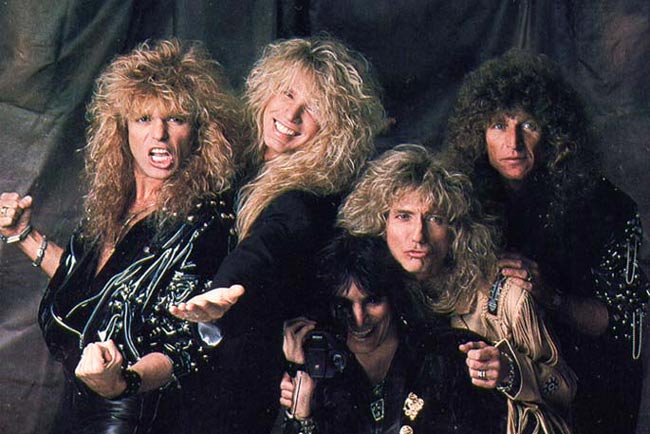
Whitesnake 1990. After four years of being at the top of the heap of the hard rock world, Coverdale put together his most talented touring outfit, featuring guitarists Steve Vai and Adrian Vanderberg, bassist Rudy Sarzo, and legendary drummer Tommy Aldridge. They packed out arenas across America, and Europe to great notices, and co-headlined for the second time, The Monsters of Rock at Castle Donington, perhaps the highest profile festival of its day.

Live At Donington 1990 is finally being released on CD, and DVD (Frontiers Records), and it is as good an example of just how good hard rock got. Coverdale is in amazing voice, the guitarists are afire, and the brutal rhythm section lets no one rest. Coming at the end of a decade that saw skills and adventurism ever escalate, this is indeed as good as it got. This is a great live record, by a great live band.

There are those who will say that the best Whitesnake featured John Sykes and Cozy Powell, others will say no, Moody and Marsden, but while all these lineups were worthy of the Whitesnake moniker, this set reveals an amazingly powerful band. This may have truly been the culmination of 14 years of band-building for the British vocalist, who is surely at the top of his game on this fantastic document.

Going back to that night in New Orleans, Steve Vai proved to me that he was perhaps the best pinch hitter of any guitarist in rock history. First, he took the reins of Yngwie Malmsteen in Alcatrazz, then he had the cajones to follow Eddie Van Halen as David Lee Roth's six stringer, and now was replacing a coterie of great axemen who had preceded him in Whitesnake. Slip of the Tongue, the record this tour was promoting, was not the best way to experience Vai. He had been called in as a last minute replacement for the injured Dutchman Adrian Vandenberg, and the result, while it made the top ten in both the UK, and America, was not the band's best. The songs had been written and arranged by Vandenberg, and it was left to Vai to do his best to fit in.

That night in New Orleans, I spent most of the evening at the side of the stage, sitting on Vai's dummy cabinet, which provided me with a rare glimpse of the naked Vai, with no effects added. I cannot remember ever being more impressed with a guitarist's performance, and mind you, this was at a time in which I heard Michael Schenker at the height of his abilities every night. He was that good.

Vai is not just a superbly original soloist, he is a stunningly good visual performer, and surprisingly a great rhythm player who leaves ample room for his co-pilot Adrian Vandenberg. Hearing this show some 22 years later, it is clear that musically, this was in many ways Vai's band onstage, and he drove it like a Maserati.

Adrian Vandenberg, mind you, is no slouch. While he is not as unique a voice as the wizard Vai, The Flying Dutchman is an astounding guitarist, and combines his melodic, and emotional soloing to create a two guitar team that provides thrill after thrill throughout this record. His solo showcase, Adagio for Strato, is a wonderfully soulful exhibition of bends, and melodious statements, which he immediately follows with the ricochet rock of The Flying Dutchman Boogie, aided by the always excellent Tommy Aldridge, whose pounding, and propulsive drumming keep Vandenberg on course. Then Adrian proceeds to wrap it up with a bit of neo-classical picking which shows he is second to no one. Bloody brilliant.

A few classic Whitesnke tunes later, and it's another solo slot, and Vai shows why he has had such a long, and successful career as the shredder's shredder. For The Love of God, Vai's first solo selection is taken off of Vai's top 20 album, Passion and Warfare, a record nearly as successful as Slip of the Tongue. A beautiful composition that is as beautiful as it is technically proficient. It's immediately followed by The Audience Is Listening, a chops fest that leaves one a bit worn, but appreciative.

Rudy Sarzo, and Tommy Aldridge provide the perfect launch pad for the guitarists histrionics, and Coverdale's incredible vocal performance. You can hear the experience they developed while working in Ozzy Osbourne's band with guitar prodigy Randy Rhoads, and together they create a constantly interesting and exciting rhythm section. Aldridge is one of the great performers behind the kit, sitting right between the quasi-jazz of Ginger Baker, and Mitch Mitchell, while embracing the showmanship and skills of Carmine Appice. Sarzo is the consummate pro, always being right in the pocket, but also playing some tremendous fills, and finding spots to shine in between the dazzling display of artistry from Vai, and Vandenberg.

Coverdale always takes the reins right back, and he delivers the goods with Here I Go Again, one of the best pop/rock songs of the decade. No matter how much the guitarists try, they never wrest the show from the man who fronted Deep Purple at California Jam. Coverdale is a man who, by virtue of his phenomenal abilities and success, was held to blame (quite unfairly) for all the excesses of the MTV '80s. All he ever did was to take the art to its apex. He rocks as hard as Ozzy, or Halford, but also has a soulful side that delivers ballads as well as rockers, and that is shown here magnificently. I quite imagine whoever sequenced this set knew both sides very well - there is never a moment in which it lags, and yet it never wears you out, either. It's more like a good lover - ever building, raising and releasing.

The hits, well they are all here. Going back to 1979's Fool For Your Loving, through the classic Slide It In, and Whitesnake (the band's self titled album from 1987 that sold 8,000,000 copies). They are played with a sense of daring, and adventure by a band that made these songs their own, while maintaining the frameworks, and essence that every fan wishes to experience.

This set will place Whitesnake where they belong historically, beside the absolute finest bands of the '80s. It will also stand beside live records by Ozzy Osbourne, Dio, Judas Priest, Deep Purple, and Led Zeppelin as documents of just how good hard rock could get.

They got too good - so good that the genre itself had to be taken down for a generation unwilling to work as hard as those who came before. Rock and roll may never again see a time in which skills, and mastery of the art form were so essential.

If you even think you like hard rock, this is a must have record. A fabulous achievement by a tremendously talented and exciting band, and as good a singer/frontman who has walked the walk, David Coverdale.

Release Dates: June 3, 2011 - Europe
                         June 7, 2011 - North America

Tracklisting

CD1 : Slip Of The Tongue; Slide It In; Judgement Day; Slow An Easy; Kitten’s Got Claws; Adagio For Strato; Flying Dutchman Boogie; Is This Love; Cheap An’ Nasty; Crying In The Rain (featuring Tommy Aldridge Drum Solo).

CD2: Fool For Your Loving; For The Love Of God; The Audience Is Listening; Here I Go Again
Bad Boys; Ain’t No Love In The Heart Of The City; Still Of The Night.

DVD: Slip Of The Tongue; Slide It In; Judgement Day; Slow An Easy; Kitten’s Got Claws; Adagio For Strato; Flying Dutchman Boogie; Is This Love; Cheap An’ Nasty; Crying In The Rain (Featuring Tommy Aldridge Drum Solo); Fool For Your Loving; For The Love Of God; The Audience Is Listening; Here I Go Again; Bad Boys; Ain’t No Love In The Heart Of The City; Still Of The Night.

Bonus Features: The Making of Slip of the Tongue; Slide Show.

Thursday, May 26, 2011

The Legend of Uli Jon Roth and The Scorpions

"Just before he left the band, Michael Schenker asked me, in fact, to join The Scorpions. He told me what was going on with the UFO thing, which was supposed to be a secret. Then Rudolf Schenker rang me a couple weeks later, and said 'Did you know Michael has left the band,' and 'We've got this gig lined up, would you like to fill in?'"

And so it was that Uli Jon (Ulrich) Roth joined The Scorpions, and in four short years the guitarist created a legacy that still dominates any discussion of what has been an incredibly varied, and productive career. In those years (1974-1978), Roth recorded five albums with The Scorpions, and arguably created a genre of rock guitar known as shred. This last comment may raise the hackles of fans of Blackmore, Page, Schenker, Beck, and Iommi, but Roth brought to the table some skills that none of these greats could quite claim.

Uli Roth took the Stratocaster and Marshall sound of Jimi Hendrix and injected it with a sense of precision, daring, and technique that had not previously been demonstrated. His speed was unparalleled, his knowledge and use of theory unique to the world of hard rock, and his whammy bar histrionics set the stage for Edward Van Halen.

Speedy's Coming was the first song on Fly To The Rainbow, Roth's first album with the German rockers in 1974, and never had any guitarist introduced himself in such an auspicious manner. He begins every solo and fill with almost unbelievable violent tremolo bar work, performing huge dives, and shrieks only to follow them with fiery licks - all while keeping the guitar in tune, a trick unheard of in those pre-Floyd Rose days. Even Ritchie Blackmore rarely played with this amount of fury, and passion.

Two songs later, Uli sings and plays his first recorded composition, Drifting Sun. Roth sings terribly. Terribly beautiful - like some of the great singers - like Dylan, and like Hendrix. The man is a visionary poet, delivering his deeply spiritual and philosophical poems over some of the most adventurous post psychedelic rock ever laid to wax. Drifting Sun is equal parts Bob, Jimi, and King Crimson. Roth successfully marries All Along The Watchtower to 21st Century Schizoid Man, while simultaneously taking the art of rock guitar to a new and exciting level.

Uli Roth, "Thinking about the early days, it may be interesting for you to know that on a recording one gets no sense of the sheer volume at all, and it is actually and most definitely not an accurate representation of what the whole thing sounded like in real life. It may amuse you to know that during Scorpions days I always played with cotton-wool in my ears, both on stage as well as in rehearsals. I call that particular line of fire the “death ray”, because it is just that – the tone has little sideways bloom, but is thrust directly forward like a sharp laser beam."

Eddie Van Halen began playing covers of Speedy's Coming, and Catch Your Train before Van Halen the band had a set full of originals to call their own. By 1975 The Scorpions were doing big business across Europe (co-headlining with KISS), and debuting in England at the Cavern Club, most famous for being the Liverpool home of The Beatles. The band released their third album (their second with Roth), In Trance, which became RCA's best selling album in Japan that year.

In Trance was a departure from the band's psychedelia tinged prog/metal - the arrangements were simplified, and the hooks became catchier. However, that is not to say that in any way the band stopped progressing. In fact, this is the album in which Uli Jon Roth stepped up to write six of the album's ten tracks, including the LP's opener, Dark Lady. If you were to put this album on and not be impressed by the sheer force, and propulsion of this magnificent chunk of rock, your sanity may be questionable. This is about as exciting as rock gets. It screams, it howls, it shouts, and Roth is playing like he's being chased by the devil, though I suspect the opposite is true, and Ulrich has Lucifer on the run here. His playing is startlingly complex, and his audacity is stunning - he fearlessly performs stunts that still have my jaw dropping, more than 35 years later. Malmsteen never got this exciting, not even close - no question that Yngwie is a remarkable instrumentalist, but his playing exhibits none of the daring on display here.

Roth on technique versus soul, "Sometimes it is important to devote time to technical aspects - and to do this intensely - but this shouldn’t be one’s main focus for long – only for as long as necessary. To concentrate mainly on the technical aspects of one’s music making can become like a mechanical drug for some people. They become addicted to technique and in some respects hide behind it – to cover up a lack of musical depth or substance by fast, slick flurries of meaningless notes. There is a huge difference between playing fast runs that are dictated by finger reflexes and by those which have musical meaning, quality, and weight. Melody is usually the first victim of this approach – rhythmical precision and clarity of phrasing and expression are often next on the list. For a lot of players this habit can easily lure them into a trap that they may find hard to escape. The problem with this way is that there is very little connection with the deeper layers of music – with the inner content; there is a lot of musical activity, business – but very little of substance is actually being said, and achieved. Concentrating mainly on technique can lead to a musician’s alienation from the essence of music, and the player is then trapped in a perpetual scraping of music’s surface level, which means he is stuck in an immature state of musicianship and never gains any deeper insights."


Here's Uli on his equipment during this period:

1) The guitars were not modified in any way except for the heavy duty tremolo system.

2) My picks tended to vary – very early on I used Fender medium, but soon I started using stronger plectrums such as Joergensen Heavy, which I played for quite some time. The picks I use nowadays are even heavier.

3) My string gauges have always varied, but I have always favored heavier bass strings. The top-string during Scorpions was always an 008. The B probably 011. The G was 015 – the others varied a lot.


During Electric Sun I played heavier strings in general – on the ‘Earthquake’ album they were quite heavy with probably a 052 bass string and an 011 top-string. For the 'Fire Wind' album I went to slightly lighter strings with a 009 at the top – then I started favoring 014 G strings, because I preferred the sound.

4) The Roland 301 Echo only made an appearance just before Tokyo Tapes – I didn’t use echo before then during Scorpions days. (I did use it before Dawn Road, though). Whatever echo you are hearing on those albums was created in the studio.

5) I did have quite a few effects lying around and used them now and then – but not very often during ‘serious’ or melody driven leads. Here is what I can remember: I had an Electric Mistress Flanger which I used on a couple of occasions. The Univibe made its first and, I believe, only appearance on ‘I’ll Be Loving You Always’. I used a Dallas Arbiter Fuzz Face during ‘Fly To The Rainbow’ at the end of the song. This was also used at the beginning of the track ‘Earthquake’. The ‘Polar Nights’ lead sound was played through a Roland Jet Phaser, which you can also hear at the end of ‘Enola Gay – Hiroshima Today?’ The Wah-Wah pedals tended to be Vox Cry Baby. I played most of my leads through it back then in order to achieve a more singing tone, but onstage it tended to be very piercing and extremely loud, which is why I always used cotton-wool in my ears. I don’t use these piercing sounds any more, nor do I use cotton-wool, but against the drums these brutal, relatively thin sounds were cutting through better.

6) My main Marshall amp was always the same: 100 Watt Super Lead Tremolo from 1972. To this day I have not found a better one for my needs, although I have other Marshalls which sound great, but this one gives me more magic."

In Trance also signaled the beginning of a heavier straight forward hard rock attack, mostly coming from the riff rich guitar of Rudolf Schenker. Songs like In Trance, Top of the Bill, and Robot Man placed The Scorpions directly in the sights of the more commercial ears of Western Europe, and music fiends in America, who were starting to take notice of this Teutonic super-group. Unfortunately, due to a lack of faith in their commercial potential, The Scorpions with Ulrich Roth never stepped foot on American soil.

It was around this time that The Scorpions, and Uli Jon Roth came to my attention. As I recall, I was 16 years old, and had only just discovered the music of UFO, and the guitar wizardry of Michael Schenker. This discovery had truly shaken, and changed my world. Having previously delved into the typical American diet of Led Zeppelin, Black Sabbath, and Deep Purple, this new style of German hard rock guitar took me by force, challenging not just my musical skills, but my intellect, as I had to absorb not just a new style, but a new language. It took some time, and I vividly recall my first listen to the band's fourth record, Virgin Killer.

Highly controversial for its cover art (over which the band had no control, and little say), Roth had this to say about the cover, and the title track, "Looking at that picture today makes me cringe. It was done in the worst possible taste. Back then I was too immature to see that. Shame on me—I should have done everything in my power to stop it. The record company came up with the idea, I think. The lyrics incidentally were a take-off on Kiss, whom we had just supported on a tour. I was fooling around and played the riff of the song in the rehearsal room and spontaneously improvised 'cause he's a virgin killer!' trying to do a more or less way-off-the-mark Paul Stanley impersonation. Klaus immediately said 'that's great! You should do something with it.' Then I had the unenviable task of constructing a meaningful set of lyrics around the title, which I actually managed to do to some degree. But the song has a totally different meaning from what people would assume at first. Virgin Killer is none other than the demon of our time, the less compassionate side of the societies we live in today—brutally trampling upon the heart and soul of innocence."

My considerations at that point were more in trying to assimilate this new information. Guitars had never sounded like this to my ears, and the band's Germanic vocalization took some getting used to, something I am infinitely glad I was able to do. As recently as today, a friend has said that Klaus Meine's voice, "sounds like someone is sticking a broken wine glass in my ear." Well, not everyone likes Dylan, either. And Klaus Meine's wonderful voice is a walk in the park when compared to Uli's singing. Again though, you must be able to see through your conditioning to accept the voice of any true artist's soul.

Virgin Killer is Uli Jon Roth's greatest contribution to the history of rock guitar. Every song is a tour de force of incredible six string heroics, and from beginning to end, Uli is covering new territory, and expanding his virtuosic palette.

Pictured Life has Roth playing dizzying, fast cascades of notes interspersed with silky bends, and as is often the case, sees him harmonizing with himself throughout. Doubling lines, creating tension with tones, and always managing to do it within the composition - never sounding forced, or out of place, it is Uli's musicianship and taste that keeps his sheer musical muscle from being overpowering.

The next song on the album, Catch Your Train is a Roth classic. It's not hard to see why a young Van Halen set this as his six string high water mark. Throughout the entire song, from the feedback drenched intro to the horrifyingly fast fills, and solos, Uli Jon Roth again makes the case that in the year of our Lord, 1976, he is probably the finest practioner of rock and roll guitar on the planet.

Uli on Eddie, "I cannot really comment with authority on Eddie Van Halen’s playing since I have only heard brief snippets here and there, but never an album. The band actually came onto the scene at a time when I had lost all interest in listening to hard rock, which is why they passed me by. Maybe I should check them out. From what I have heard, Eddie played with emotion and conviction, I thought."

Jimi Hendrix has always loomed large in the artistry of Uli Roth. Roth obviously absorbed everything Hendrix did, and while you certainly hear the influence, it is especially apparent when you hear the guitarist slow down, and play softer, more emotional material. Yellow Raven the last song on the Virgin Killer album is perhaps the finest example of the German paying homage to his American forefather. And while it's the song's sultry rhythms that evoke the memory of Jimi, Uli's leads and fills are his unique brand of soulful bending, and masterful flights of fretboard fire that mark this as his own. The ending coda is superb in both composition, and execution, and stands as one of the finest fade outs in all of rock's recorded history.

By 1978, The Scorpions had spent many years, and traveled many thousands of miles establishing their brand in the world of rock and roll, but what had emerged was a coin with two very dissimilar sides. One side had the catchy metal riffs of Rudolf Schenker, and the other featured the more cerebral contemplations of Uli Jon Roth. It was a stew that served the hardcore fan such as myself very well, but confused the more casual listener, and left both sides somewhat dissatisfied.

Uli Jon Roth on rock, "The truth is that I have never loved rock music and it was never close to my heart, but I have always been fascinated by some of its aspects and certain possibilities or characteristics which I saw of artistic value for what I wanted to express. This is still the case. When I was in the Scorpions it was a distant dream for me to be able to do one day what I can do now. My playing in those days reflected early projections of that dream to the best of my abilities – but back then I felt extremely limited by so many things. Today I don’t feel limited anymore – I feel free and at peace with what I do – at least most of the time, but there is always room for improvement, and I do enjoy the journey.

"Back in the Scorpions days I also didn’t like the sound we created – I found it too mechanical and lacking mystery. But I felt the same with regard to many, probably even most bands – I think I also rebelled against certain formulas.

"In those days I really felt that our sound was too plain and also too brutal – lacking warmth. The recording process was too casual and we never explored anything in terms of sound. I clearly remember that I was usually highly dissatisfied with the results. I think we could have done it so much better – even at that time, but we were never in a studio I liked or had sufficient time to really get to grips with things.

"I know that there are many who don’t share these feelings of mine regarding those early days, but I think I do hear things differently from a lot of people – not necessarily better, but certainly from a very different angle."

By now, the magic had waned, and The Scorpions had become Uli Jon Roth's job. So, how do you think the maestro decided to handle matters? By recording two of what are still considered by most hard rock guitarists, and serious listeners as a couple of the genres finest records.

First came Taken By Force, this version of the band's final studio album. The disc includes just three tunes written by Roth, Your Light, a typically spiritual number in the tradition of Roth's balladry, the shred guitar classic, The Sails of Charon, and the prophetic, I've Got To Be Free, which features lyrics that state his case for leaving the band very bluntly, with lines such as: "I'm not your Bugs Bunny, and you're not my wife..." However, Roth's playing on the album is superb. He may have considered it a job now, but it was a job he performed as few could.

The album contains two of Roth's finest guitar moments, those being the whole of The Sails of Charon, and his epic soloing on the Monika Danneman penned, We'll Burn The Sky. Both are sublime examples of the finest, fastest, and flashiest rock and roll guitar playing.

Though Roth disagrees, I find his playing on this record to be as good as any he had done to date. His soundscapes on several tunes are as expansive as any, and his lead playing is fiery and inspired. Once again, album cover art became an issue (the original cover featured children playing with weapons in a graveyard). On this, Roth states their case with his usual elegance:

"I think the original idea was children playing with guns at a military cemetery  in France and some people found that offensive. I don't think it's offensive because I think it was actually a quite a good image because it puts war totally into perspective, very often it is young people, eighteen, nineteen , going to war that don't fully understand life. When you're fifty you don't fully understand life, but these guys then have to shoot other people simply because someone tells them to do it for their country. Politicians are sometimes also children with guns, in all periods of time a lot of politicians are far too trigger happy and war too easily becomes an "easy solution", whereas for me it should never be a solution, there should be no war in the first place. Maybe every once in a while a country may need to defend itself, I understand that, but in general if you consider that there are over a hundred wars raging in the present day on this planet alone then it's just sheer lunacy and always the tool of the Dark Side. Usually bad things come from war, very few good things, but sometimes good things come from bad things, that's true, nothing's that black and white. It's always the wrong solution to kill people."

As you can see, Uli Jon Roth is as good with language, and with his thoughts and philosophy as he is with an electric guitar. He is an artist who lives his art as much as he has ever performed it.

Tokyo Tapes. Uli Jon Roth's final recording with The Scorpions. I could write another lengthy article just on this record, perhaps the greatest live document laid down by any rock guitarist, but I won't. I will simply tell you to listen to it. To listen to this album is to realize why the legend of Uli Jon Roth's work with The Scorpions still stands as the template for much of the heavy music that has followed.

tony conley

The quotes used in this article come from Uli Jon Roth's website - questions asked by fans, and answered by Roth. I have attempted to use them in proper context, and with original intent and meaning intact.

Wednesday, May 18, 2011

God Bless UFO

"I've a bet with the drummer, 50 quid....he says I'm gonna fall flat on my face."

Phil Mogg is leaning heavy on the mic stand, and smiling, having just led his band of veterans through a spirited rendition of 1981's The Wild, The Willing, and The Innocent, and before counting off the classic rocker Mother Mary, he's had his first jibe at his band-mate for some 42 years, Andy Parker. It won't be near the last of the evening, and he wins the bet.

Tonight, UFO played a blinder of a set, tearing their way through a catalog that the audience knew like the backs of their hands. The band performed as if they were in front of 10,000 instead of 500, and the fans responded in kind. It was a genuine love fest, with both sides reveling in a long shared history.

Dayton is one of but 14 cities in America seeing UFO on this tour, chosen, no doubt by its longstanding love affair with one of Britain's greatest hard rock acts. There is a staunch sense of survival on both sides, with each losing as many as they've won over the years, but neither willing to say so on this cold, rainy evening. No, this is a night of victory, celebrating the fact that all are still not just standing, but rocking.

Mother Mary  kicked off side two of the band's 1975 release, Force It, and for good reason it has never left the set list. Vinnie Moore has been playing this riff laden rocker for more years than any of the group's guitarists, and he delivers it perfectly, replicating some of the original's scorching leads and fills, and adding more than a few of his own. All night long Moore fuels the band's many great songs with a delightful nod to the past, and constant reminders that he is his own man,  a great guitarist.

Next up is Saving Me, from the band's last studio album, 2009's The Visitor. This number exposes UFO's bluesier roots, with Moore playing some tasteful acoustic slide guitar during the intro. Vinnie saunters seamlessly several times throughout the night between electric, and acoustic, segueing between the two smoothly and to great effect. Phil Mogg sings the song with his usual deep sense of sincerity. Mogg may be the consummate member of the boys club between tunes, but when he sings, it is with a passion perhaps unrivaled since the departure of Thin Lizzy's Phil Lynott. His understated melodies, and masterful phrasing assures that these are songs straight off his sleeve by way of his heart. Mogg has long been one of rock's finest, and most underrated front-men.

Let It Roll is met with a huge acknowledgement of recognition by the fearlessly faithful, who howl when they hear Moore sound the tune with those eight bars of beautiful feedback which are followed by the tune's steamroller rhythm. Let It Roll is a song that UFO has been playing effortlessly for a great many years, and their effortlessness belies the staggering amount of skill, chops, and energy required to make it through this complicated, and unconventional composition. The song winds along, through the heaviest of metallic verses and choruses, only to be interrupted by two forays into decidedly Germanic gypsy tinged sections. the first is a staggering stream of choppy single notes, that then lead into a fiercely romantic, and melodic solo section, in which Moore is joined by one of rock music's finest keyboard players, Paul Raymond, who matches Moore note for note through a complicated scheme of harmonies. Raymond has long been the perfect fifth member of the group, exchanging his keyboards for some great rhythm guitar chugging when required. By the song's blistering riff of an ending, the band has conquered the audience completely, and it's a full minute of appreciation before the band can get on to the next.

Given the length of UFO's career, it is only fair that they should delve into newer material, though one gets the impression that the fans wouldn't mind a note by note replay of the band's 1978 classic Strangers In The Night, which still stands as one of the greatest live records. Helldriver, and Venus are next on the set list, and both grab the audience, and bring them along through an update of the band's history.

By now, Mogg has upped the ante, telling Andy Parker that now each song he gets through will cost the drummer another ten spot. The drummer replies that Mogg can subtract it from his past debts, and with that, these fellows who have aged so very gracefully (it's easy to forget the times when it looked as if the wings had fallen off the spaceship) slam head first into another rocket shot rocker from 1975's Force It - the staccato, hyperactive blues of This Kid. Again, Vinnie Moore takes the riffage of another guitarist, and captures the essence of the tune before unleashing some virtuosic torrents of his own.

Moore and Raymond then team up for the beautifully melodic intro to I Ain't No Baby, and the crowd goes nuts, as this number is a longtime favorite, but one seldom seen in the band's live sets. This tune is a Phil Mogg tour de force, and the singer milks it for everything it is worth, hitting every note with great precision, and emotion. UFO's songs have always been a nice combination of streetwise cockiness mixed with a born to lose vibe, and once again audience and actor are sharing the same space in time.

Only You Can Rock Me takes me directly back to the first time I saw the band, opening for Aerosmith in 1978 at UD Arena here in Dayton. It is as if 33 years have lapsed in an instant. From the song's instantly recognizable intro, to the melodic single note underpinnings of the verses, and onward into one of the most memorable guitar solos in rock history - once again the band tosses it off with aplomb and ease. Grace has perhaps been the true mark of this group, their ability to go from street kid toughs to sublimely sophisticated musicians in the blink of an eye, without a moment's pretension. Hard rock has perhaps not seen another band with more class.

The audience again goes completely bonkers, and the band basks in the reflected glory of shared love.

Vinnie leaves the stage for a well deserved toweling off, and guitar change, as Mogg again addresses the crowd, "This one is about a love affair that went not so well....It's called Try Me."

Paul Raymond's years of discipline, and practice at the piano were never more on display than when this truly elegant man plays the gorgeous introduction to UFO's finest moment of balladry. Mogg delivers this with a look and sound that suggests he means it now, as much as ever:

"Try Me, oh take me for a little while,
Before it's over, and you leave me with just a smile,
Try Me, oh let me be the one,
You say it's over, but for me it had just begun."

Vinnie Moore then nails one of the most distinctive of solos, a signature set of notes laid down by one of the best guitarists to ever pick up the instrument, and though he brilliantly changed a section and inserted his own take on the art of emoting perfectly through six strings, the audience was none the wiser, and wisely accepted the solo as his own.

If it had ended there and then, there would have been no complaints, but actually this seasoned band of veterans were just getting wound up, and it was time for a ferocious bolt towards the finish line as the band proceeded on to play perhaps their five best known tunes.

UFO were not always a club band, no. There was a time when the band was at the crest of super-stardom, back in 1977, coincidentally, the year I graduated from high school. The band released what heavy metal critic/talk show host Eddie Trunk has called his favorite album, the incendiary Lights Out. The album flew up the Billboard charts in a day when the charts still meant something, when we actually bought the music we chose to listen to. Lights Out knocked on the Top 20's door, arriving at 23, almost unheard of for what, at the time, was considered a heavy metal record. The band was always more melodic than metal, but rock wildly they did, and never more so than with the album's lead single, Too Hot To Handle."

I've not yet mentioned bassist Barry Sparks, but filling the shoes of the truly legendary Pete Way is as difficult a job as there is in all of classic rock. Way co-wrote a great many of the songs being played tonight, but more importantly he had what is so very rare, a tremendous stage presence. Pete Way was a direct influence on Iron Maiden, and Def Leppard, as well as indie rockers Guided By Voices. As much as an absent guitarist can create a gaping hole, so can the band's spirited cheerleader, the life of the party itself.

Sparks is a veteran with an amazing resume, including time spent with Yngwie Malmsteen, Uli Jon Roth, Ted Nugent, Dokken, The Scorpions, and of course, the Michael Schenker Group. Not just a great player (and he is a monster of a musician), Sparks is a tremendous performer, singing every word of every song, engaging the audience constantly, and conveying the sense that there is no place better in the world than onstage with a great rock and roll band. I can think of no one better to fill Pete's shoes, and as a player, no one can argue that he's a great musician.

Someone close to the band of old suggested to me before the show that I was about to see, "....a crown without the jewels." Actually, nothing could be further from the truth of the matter. Don't get me wrong, I miss seeing Michael Schenker and Pete Way playing in UFO. Anyone who ever saw them would. But, it is by their choice that they are no longer members of UFO. UFO is still a very great rock and roll band, not a tribute, not a substitute in any sense.

Doctor, Doctor is the oldest and perhaps most beloved song of the evening, dating back to May of 1974, and the Phenomena album, the first with which UFO dented the American consciousness. Another timeless classic that the audience sings as loudly as the band, and the smiles upon the faces of everyone in the room says it all.

You can tell a UFO fan by walking up to any fifty year old rocker, and simply saying, "Misty green, and blue." If they are a fan, and they inevitably are, they will respond with, "Love to love to love you," the chorus of an epic tale of rock and roll and the road, Love To Love. Yet another complex arrangement that would leave even the most competent musicians scratching their heads, the song sees Moore switching from electric to acoustic throughout, and playing some of the best guitar of the night. The entire band is highlighted on this wonderful old gem that leaves some in the audience a bit misty themselves. Maybe that is the greatest thing about this great night - the fact that everyone appreciates. The audience loves, and appreciates the band - deeply. The band loves, and appreciates another night of glory and shared feelings. This is the truth of rock and roll. This is UFO.

Mogg has been playful with the audience and the band all evening, and especially with the aforementioned Andy Parker, who incidentally is playing as well as I've ever heard him play, bringing a carpenter's slam to every snare shot, and directing the newer kids with his expert timing, and fills. Now, Phil gives the audience a hand in song selection, asking if they'd rather hear Rock Bottom, or Lights Out.

Rock Bottom is a riff like no other. It suggests nothing that came before it, and it has not been copied, or cloned. It is as unique a riff as exists. Vinnie Moore, and the band take the audience on a twelve minute journey that is amazing to watch. It contains all the elements essential to the band, and expand on what has preceded it. Paul Raymond is once again masterfully switching instruments, and his duets with Moore are as breathtaking as they were with Schenker back in 1978. Harmony and unison lines are passed back and forth with daring, and precision. If there is a better rocker with which to end a show, I've yet to hear it.

And with the completion of Rock Bottom, it is, "Thank you, and good night."

"UFO, UFO, UFO, UFO, UFO, UFO, UFO, UFO, UFO...."

That's twice tonight that I've heard this chant, and twice that its sheer energy and exuberance have blown me away.

Once again, Mogg plays the gracious host, and offers his audience a choice. "Lights Out, or Shoot, Shoot?"

Lights Out it is, and I have to believe the crowd made the right call. The blistering pace of this number makes it the perfect encore. 'Hold on tight, until the end,' indeed, and we do, as Moore and Sparks take this one beyond the limit, and into territory both new, and exciting. These two outstanding players bring to this band a combination of extraordinary musicianship, and beautiful enthusiasm. Though many years younger than the band's founding members, better band-mates could not be found. I honestly cannot remember when I've seen a band have more fun onstage than this bunch did tonight.

To those members who I first saw back in '78, I offer this:

Phil, Andy, and Paul - I thank you fellows from my heart for a great, great many years of service, and enjoyment. For everyone in the audience tonight, I think I can say that this was a great one, a show we will always remember, a night that made us recall why we love rock and roll, why we love UFO so dearly.