Thursday, July 5, 2012

Buffalo Killers - Dig. Sow. Love. Grow. A New American Guitar Hero's Arrival


First, let's talk about their rather ironic name. Buffalo Killers sounds a little rough, but you'd be hard pressed to meet a more polite, well behaved bunch, and in the words of singer/bassist Zach Gabbard. "We're pacifists....lovers, not killers!" However, there is the fact that this band does look like a bunch of buffalo killers - bearded, large in stature, and dressed to not impress, they could easily have just stepped off of a train sliding across the Midwest of America in 1869, after a month of tallying up bison. By the same token, this band would just as easily have fit in on that train crossing Canada in 1970, carrying Janis Joplin, The Band, The Grateful Dead on a trip known as the Festival Express, that saw the hippie elite drinking, smoking, and jamming their way into history. Maybe equally interesting is that sonically, they would have fit right in. Good music knows no age. 

Buffalo Killers are a true band - the Gabbard brothers, Andy and Zach, sound as if they've been singing together since the cradle. They were groomed for their jobs by their father's record collection, and his gift of early age guitar instruction. Zach recalls, "...listening to Neil Young, The Grateful Dead, CS&N, and The New riders of the Purple Sage as far back as I can remember." The apple did not fall far from the tree in the Gabbard household. Drummer Joe Sebaali has played with the brothers since he served as keyboardist in their early days of playing as Thee Shams, days in which the Cincinnati garage rockers released four albums on four labels, and toured extensively. Eventually it became obvious that Thee Shams had come to their logical conclusion, and were laid to rest. The brothers soon reconvened and it resulted in Buffalo Killers being formed in 2006.


Almost immediately they recorded a demo with producer John Curley (Afghan Whigs) that Zach sent out to some record labels, and they were instantly signed to Alive Records - the band quickly recorded five more tunes to round out their eponymous debut. The Black Crowes' Chris Robinson heard the record and invited the Killers out to open some shows on the band's Warpaint tour in 2007. Then their credibility increased even more when Dan Auerbach of The Black Keys signed on to produce their sophomore effort, Let It Ride. They also toured with the Akron band in 2008. In 2011 Buffalo Killers returned to the recording studio and pumped out the successful 3, an album that Vive Le Rock described as, "Twelve tracks of melancholic psych rock with twists of folk - 3 is perfect summer music."

Dig. So. Love. Grow. is the record that should catapult Buffalo Killers into a higher realm of rock - hopefully, a realm which will see them quitting day jobs, putting in much more time on the road, and focusing on their music as a full time proposition. The band has just signed with New Frontier Touring, the large agency out of Nashville that books road warriors like The Avett Brothers. Their timing is exquisite, as this record will certainly raise their visibility.

It's really tough to talk about Buffalo Killers and not compare and contrast them with many of the best bands of the 60s and 70s - while on one hand, the band bristles at the 'too easy' attempts to dismiss them as revivalists, or revisionists, they also take being mentioned in the same breath with their heroes as a compliment. The truth is that they should be congratulated on following their collective muse, and damned the torpedoes. This is a band that plays guitar based rock and roll with a heavy heap of vocal harmonies - with an emphasis on songwriting, and dynamic instrumental interplay. They play what they love in the fashion they are able, and what we are given is a soulful stew of excellent songcraft, and quality rock - whether it was recorded this year or in 1969 matters not a bit. The songs are melodic and memorable, the vocals a classic example of what happens when brothers sing together, and they have a drummer who often comes dangerously close to rolling off the rails with a strange, and unpredictable syncopation that makes me smile as I remember Levon Helm.

What I really like is the fact that we may be in the presence of a new and genuine American guitar hero. Andy Gabbard is an encyclopedia of cool guitar tones, chord changes, fills, and solos. He manages to use enough tone modifiers in the way of varied distortion tones, tremolo, and time based effects to keep things interesting, but it's his staunch rhythm chops and sinuous soloing that has me so giddy. At the risk of offending or oversimplifying, I hear the legacies of a lot of my favorite players and favorite tones in his playing. Occasionally I'll smile and think of Joe Walsh's wonderfully funkified staccato right hand picking style and his slightly behind the beat rhythm chops. The legend of Neil Young's fire breathing Tweed Fender Deluxe shines through, along with his pathos filled chord progressions. Then I hear the Mid-Eastern market open, and the slippery washes of sound that informed the best of Jimmy Page's Danelectro fueled orchestrations, as on the wonderful strut of Those Days.

The younger Gabbard brother isn't the flashiest soloist, and his chops aren't going to send anyone running for the woodshed, but that's never the point - guitar heroes are not always those with the flashiest fingers, but they are always the most musical, and Andy is one innately musical son of a gun. The hardest job in rock may be that of a guitarist in a three piece - the guys who have done it best were often the guys who could cover the most ground without becoming tiresome, or overly repetitious. Jimi Hendrix, Eric Clapton, Jimmy Page, Jeff Beck, Joe Walsh, Billy Gibbons - these are the unarguable masters of the power trio, fellows who were able to carry bands just not through the night, but through a career without boring their listeners. While the times have changed, and there's little chance of Buffalo Killers selling tens of millions of records, there is every chance that Andy Gabbard could continue to up his game, and end up with his mug on magazine covers, and his name brandished a few signature models. If you learned every lick on every Buffalo Killers album up to this point, you'd have a hell of a rock and roll vocabulary, and a mess of musicality at your disposal.

The album's lead off track, Get It, is a battle cry for the disenfranchised - "You say your tired of being pushed around, and everybody's in your way, sometimes you got to push your weight around," and boy do they. This joyful freight train of fuzzed out bliss is catapulted by an insistent piano riff that cuts nicely through the muscular marriage of Andy's guitar and Zach's heavier than Hell bassline, and the boys drive their message of empowerment home, then Andy cuts loose with an audacious solo that is filled with propulsive pentatonic vitriol. Powerful stuff.

I looked all over the original Woodstock soundtrack, hell, I even looked over the complete setlist for the festival, and I could find neither heads, nor tails of a song titled Hey Girl - I'm joking, but damn, this tune is a fantastic slice of what made the combination of Neil Young and Stephen Stills so enticing. Fact is, the era it's from doesn't mean a thing - it is a convenient reference point, and an easy way for me to communicate to you what this thing sounds like. It's filled with melody, hopeful lyrics, great guitars, and some cool vocal interludes. While, of course, I'd love for CSN&Y to record another great record - this will do just fine. A summertime, top down, driving down the highway with the wind in your hair classic.

Rollin Wheel is a sophisticated slice of syncopation that grooves like mad, largely due to Andy Gabbard's choppy rhythms and drummer Joe Sebaali's death defying act of entertainingly waiting until it's almost too late to decide which fill he wants to play, but always making it work - the slight variance between the guitars insistence and the drums slight hesitance makes this a joy. Zach Gabbard keeps it all glued together with a rock solid bassline that bounces with an appropriate buoyancy as he bops between octaves.

As I mentioned earlier there is no escaping the fact that Those Days trespasses a bit on the houses of the holy, but it does so in a fashion that no one has captured for a very long time, and did you notice the groovy backwards tracked guitar solo? Good music is good music - it transcends era, it matters not when it came to pass, The Beatles would be The Beatles at any point in history. That's one of the beauties of guitar based rock. Unless you are going for a fashion sound (nu-metal anyone?), you may find yourself sounding as relevant 40 years from now as you do today. Buffalo Killers are a very musical, and unpretentious bunch - they write excellent songs and they play them. My litmus is to take Dig. Sow. Love. Grow. and listen to it next to a record recorded in the 60s - it sounds fine. Then I listen to it next to something recorded last month - it still sounds great. If you listen with the wrong ears, things can get screwy pretty quick. Take music at face value - remember how you approached it when you were fifteen.

I Am Always Here is a muscular mid-tempo rocker on which Andy Gabbard plays casually, but with great command. His rock riffery is in fine form as he punches a few power chords, then arpeggiates some chords in a rather nice, melodic fashion before he wraps up the riff with some world weary bends on the lower strings that convey the emotional content of the tune. Sebaali is again all over the map, and Zach Gabbard carries the day with a confident vocal and another solid bassline.

Buffalo Killers gear it down wonderfully. When they downshift it all becomes rather soporific, and spacey. They take you on a gentle journey, as on the tune Farewell - a loping bassline keeps things melodically interesting as Andy adds chord colors and textures. Sebaali sounds just drunk enough behind the kit to never really let you relax. Going slow isn't as easy as it sounds and these guys do it masterfully.

Psychedelia figures heavily on this record - there's a lot of atmospheric information that seems to hang in the clouds above the tunes, whether in the form of the band's exquisite backing vocals and harmonies, Andy Gabbard's effects laden forays, or Joseph Sebaali's occasional lurching as he goes from soft, sympathetic accompaniment to hammer heavy tom and cymbal work. It all stays on the tracks, but there's always the wondering of just how they are going to pull it off - these guys are the Flying Walendas of rock and roll. Graffiti Eggplant suggests that the band may even have some minor prog-rock leanings, as Andy Gabbard layers some sweet guitar harmonies (more Steve Howe/Yes than Thin Lizzy in terms of guitar harmony, by the way) amidst the power rock.

I've been raging about the brilliance of Andy Gabbard, but I still have to say that much of the spirit of it all resides in the heart of Zach Gabbard - his vocals and songwriting are truly unique, in spite of what one hears about all the Joe Walsh/James Gang comparisons. I think that the sound that comes out of this band is about exactly what you'd think. It's the sound of a group of fellows who have been playing together for quite some time, living out on a farm with lots of land, guitars, amps, drums, and beer, but little in the way of distractions. They couldn't change it if they tried - this record is a great slice of who and what they are at this moment. A very, very good rock and roll band that will most likely become a very great rock and roll band. Some serious roadwork, and another record like this, and  we'll see the band much higher up the bills at some big festivals and headlining tours of their own. They have a ways to go, but they will get there, you can bank on it.

Dig. Sow. Love. Grow. is an excellent album, and one that should bring Buffalo Killers great success, and position them for even greater things.

Thanks to Tony Bonyata at Pavement PR, Buffalo Killers, and Zach Gabbard!

Tuesday, July 3, 2012

Asia - XXX : A Great Return To Form

XXX is exactly the album you want to hear by Asia in their thirtieth year. It's the fifth album by the 'classic' lineup, and every song on the record is a winner. A great return to form.

It is a mature and melodic record, not as bombastic as the group's debut in 1982, but mature and majestic - befitting for a band that has almost 200 years of experience under their belts. I'm thrilled that they stick to what they do best, and quite frankly, precisely what their audience expects. They haven't modernized, they haven't re-tooled - they have delivered an album filled with tunes that even on first listening sound like old friends.

Lead singer/bassist, and songwriter John Wetton is truly at the top of his game. It was a year ago this week that he released his stunning solo release, Raised In Captivity, and in the interim he toured the world with his band of prog rock wizards UK.  Now he returns to the studio with cohorts in Asia (Geoff Downes, Steve Howe, and Carl Palmer) to serve up XXX, an extremely satisfying serving of radio ready prog/pop.

Face On The Bridge is the album's lead off single, and it sits currently at #7 on the Planet Rock Radio Airplay Chart. Geoff Downes' intro takes you straight back to a time when MTV meant music, and the music was great. He's promptly joined by guitarist Steve Howe (Yes) and drummer Carl Palmer (Emerson, Lake, and Palmer), who were two of the absolute kings of the progressive rock world when Asia first decided to make a run at the radio charts. They join in with power chords, a rock steady rhythm, Wetton's throbbing bassline, and some sumptuous harmonies.


"it was a day, just like any other day," Wetton belts out the opening line and we are transported in time. "I walked alone, through the old town."

John Wetton sounds like a man possessed - and let's face it, he is. He almost wasn't the band's original lead singer, even though he wrote the lyrics and melodies, and he drank himself right out of the band at one point. Geffen Records executive John Kalodner had tried to insert ex-Journey frontman Robert Fleischman (co-writer of two of Journey's biggest early his, Anytime and Wheel In The Sky), who left amicably when he found Wetton to be the better man for the job. After their debut record's huge success, Wetton was shown the door on what should have been their biggest moment - Asia in Asia was to be the first ever live telecast of a concert via satellite to America by MTV. In one of those stranger than true rock and roll moments, Carl Palmer called upon his old ELP bandmate Greg Lake (who Wetton had earlier replaced in King Crimson) as a last minute stand-in, and while the band got through the show, they never regained their lost momentum. Thirty years later, and he's hail and healthy - to a large degree he dominates this album with solid songwriting and exemplary vocals.

XXX is comprised of song after song that could easily be considered singles. Bury Me In Willow is another Wetton showpiece - his voice is truly amazing, and Downes has written an album full of compositions that fit his singing like a glove. I've always found Geoff Downes to be much better suited for pop than prog - he's more songwriter than virtuoso, and his brilliant production talents are in full bloom on this tune. After the second chorus the band goes symphonic, and as Carl Palmer reminds you that he's 'that' Carl Palmer, Downes leads the band through a thrilling instrumental bridge before Wettons step back to center stage. Wetton has written a bunch of great hooks for this record, and the vocal arrangements are stunningly elegant. This is great pop music - simple as that.

Steve Howe may be rock's most eclectic guitarist - he literally introduced the rock world to chimed harmonics with Yes's Roundabout, made the nylon stringed classical guitar a standard issue piece of equipment for longhairs, and he made us all wish we'd practiced a whole lot more. In Asia, however, he puts on his rock suit and boots, and heads right off to work as a chord crunching rocker. His playing in Asia is perfect for the band, and if you didn't know, you'd swear he was Clark Kent, and not Superman. He plays for the song, provides the rock required for this band, and his solos are taught and melodic. While he may not shred, he does thrown in more than enough 'how'd he do that?' licks into the proceedings.

Wetton is surely one of England's greatest troubadours. He is a poet, and an unapologetic romantic, whether he is singing of love, or betrayal. His writing is simplistically sophisticated - while his lyrics are fairly straight ahead, they are also extremely masterful, much in the same way as McCartney's. Silly love songs? You try to write one, then get back to me. He makes a phrase like Al Gatto Nero sound perfectly natural, and will have hoards of listeners Googling that one.

XXX is a great Asia album. XXX is not going to convert the non-believers, and I'm sure that is not the band's intention - this record is a hugely successful 'give the fans what they want' moment. If you enjoyed Asia before, you'll adore this record. If you didn't, well, you might want to give it a listen and discover that when you listened to Asia in 1980, it may not have been with the right set of ears - for what Asia does, they do brilliantly, and every member is in top form here.

John Wetton. What's next for this guy? Granted, the whole of Asia is in magnificent condition, but Wetton's performance is sheer brilliance - the guy is on one hell of a winning streak, and seems to be growing stronger with each project. One of the strongest comebacks in rock history. He beat drinking, he beat heart surgery, he beat carpal tunnel, and now he's beat his best. Congratulations again, John.

Thanks to Asia, John Wetton, Frontiers Records, and Peter Noble at Noble PR.

Wednesday, June 27, 2012

The Wrecking Crew Movie - A Great Tribute

"'The Wrecking Crew' documentary by Denny Tedesco is a must see. It opens our eyes to one of the most unique group of musicians in contemporary music. They are the well from which the rest of us have drawn." Leland Sklar.
You may be forgiven for not knowing Leland Sklar. His leonine visage may actually be more familiar, what with him having graced the stage as the 'go to' bassist for James Taylor, Jackson Browne, Genesis, Toto, and countless other acts for the last few decades. He should be better known for being one of the most recorded and talented musicians in modern history. Leland's skills as a session player are legendary - session players are musicians who, in the words of Wikipedia, "...are instrumental or vocal performers who are available to work with others at live performances or recording sessions. Usually such performers are not a permanent part of a musical ensemble and often do not achieve fame in their own right as soloists or bandleaders." Boy, that's a little clinical, but it sure says a mouthful.

The records of acts that were the creations of marketing and record company executives, such as The Monkees, and The Archies are well known to have largely been the work of behind the scenes session players. However, not so well known is the work of unofficial and loosely membered groups (collectives?) known as The Funk Brothers, The Muscle Shoal Rhythm Section, The Nashville A-Team, The Section (which included Sklar), MFSB, and The Wrecking Crew. These six aggregations created records that sold more copies than most likely did The Beatles, Led Zeppelin, The Who, and Elvis combined.

The Funk Brothers - they were Motown's men, playing the music that made Diana Ross and The Supremes, The Temptations, The Four Tops, Marvin Gaye, and many others so successful. In fact, many experts consider Motown bassist James Jamerson to have been the greatest session musician of all time. The Muscle Shoals Rhythm Section were The Swampers mentioned in Lynyrd Skynyrd's Sweet Home Alabama - providing the soulful and muscular backing for Aretha Franklin, Otis Redding, Percy Sledge, The Staple Singers, and most every other act that mattered out of the American South in that era. The Nashville A-Team owned the country & western charts throughout the 1950s and '60s. The Section defined the singer/songwriter sound out of California in the '70s. MFSB were TSOP (The Sound of Philadelphia), creators of the masterful tracks of The Stylistics, The O'Jays, Wilson Pickett, The Spinners, and Teddy Pendergrass.

Then there is The Wrecking Crew. This nickname was coined by Drummer Hal Blaine, perhaps long after the fact - allegedly echoing the words of the previous generation of serious, suit wearing, note reading sessioners who claimed that these young, unshaven upstarts with their noisy rock and roll would 'wreck the music business.'

The Wrecking Crew first became known as the team of musicians utilized by studio prodigy/pop producer Phil Spector. It featured a revolving team of talent that included Glen Campbell, Leon Russell, Carol Kaye, Tommy Tedesco, Barney Kessel, Hal Blaine, Howard Roberts, Al Casey, and many others. Whether the Crew's largest legend is The Beach Boys Pet Sounds, or maybe being the musicians who created Spector's famous 'Wall of Sound,' it may safely be said that no other group of musicians ever played on more hit records. To say that they were the major pop/rock music making machine of the American '60s and '70s is an accurate statement.

Leland Sklar adds, "The 'Wrecking Crew' were the guys, just before my run started. I was in a band in 1966, and when we went into the studio it was those guys who played on our record. I sat there looking through the window in United A studio, and was in awe. There was Hal Baine, Jim Gordon, Bobby West, Tommy Tedesco, Mike Deasey, Dennis Budimir, Mike Melvoine, Larry Knechtel, Mike Rubini, and others. Within three years I was working with these guys on a daily basis. They were my mentors. A more fun and giving bunch of characters you could not have asked for."

I'm sure that most of you reading this are aware that Tommy Tedesco's son, Denny, has made a full length documentary called The Wrecking Crew. I've just viewed a private copy, and I can tell you - it is the best film you will ever see about one of the most exciting times in musical history. It stands proudly beside Standing in the Shadows of Motown, the award winning documentary that so wonderfully told the story of Detroit's Funk Brothers, as a musical bookend to that fabulous era of record making. Tedesco has compiled an incredibly loving, and touching tribute to these musicians, their time, and their place in musical history.

Even though I already knew most of the stories the film tells before I ever saw it, I will still be going back and re-watching this documentary for years to come - for the sheer joy that it brings. Tedesco has done a fine, fine job of pacing, mixing interview clips compiled over the years with still photos, and filmed scenes from behind the scenes as the music was made. It is the kind of film that will have you wondering where the last two hours went. As I said, I knew most of these tales previously, but what an enjoyable flight to take, to finally be able to watch the telling of these anecdotes in such an entertaining way. Everyone I have talked to that has seen the film agrees - it is a masterpiece of documentary filmmaking.

Sadly, the days of the session player have largely passed. To a large degree, it died off alongside the record business. In fact, this movie is suffering for a lack of commercial release itself. It's been lauded far and wide, screened for thousands, but due to the huge expense of licensing the amazing music contained within (some 130 song clips), it remains unreleased. It seems that the record companies are so pinched for profits that they can't see the wisdom of foregoing a license fee, in spite of the fact that the movie will surely stir up an avalanche of sales for back catalog when the film does (if it does) get publicly released. If nothing else they should forgive the licensing as a thank you to the musicians involved, letting the players now get the well deserved credit that avoided them in their primes.

Denny Tedesco and his team are now showing the film in private screenings being sponsored around the country in order to raise the funds necessary for the film to be shown to the public. 

When I say that the film has garnered great and loving reviews, I kid not. Here's a sampling from some folks you may know:
"A wonderful, touching, and hilarious film about the unsung heroes of so many songs that you carry in your heart." Elvis Costello

"It was incredible! I felt like I was sitting right there with them at that table. It had everything that I wanted to see, and more that I didn't expect. Thank you for making this film!" Peter Frampton

"Denny Tedesco has given us an amazing look at a musical moment in history that everyone who loves rock and roll should see." Christopher Guest (director and star of Spinal Tap, and other great mockumentaries)

"The Wrecking Crew is in the league of the best music documentaries ever made!" Dan Forte, Vintage Guitar Magazine, Dec. 2009

"If I had known they were available, I would have used them on my records! The Wrecking Crew is the best documentary yet about the recording scene. I loved it." Steve Miller (Gangster of Love)

"They were the unsung heroes - if those guys were playing sessions today, they would be known, people would know about them. It would be something more than just session musicians." Cher

"I highly recommend this to everyone to see. It's terrific, hard hitting with the right punches, and filmed as only experienced, and fine filmmakers can do. I know your revealing film will be enjoyed and appreciated by the public for years to come." Carol Kaye
 Carol Kaye? Isn't she on record as being vehemently against this film?

She is, indeed, and as Leland Sklar has remarked about the situation, "I just don't get it!"

I do not doubt that there is a possibility that the name The Wrecking Crew may have come after the fact. And, as the film was made by Tedesco's son, I'm not too shocked if Tommy gets a lot of screen time, but I will add that the elder Mr. Tedesco introduced a great many of us to the realities and the existence of studio/session musicians many years ago in his brilliant columns in Guitar Player Magazine for so many years. Without the Tedescos, we might still be wondering who made all this great music.

Ms. Kay is treated fabulously in, and by this film. I would certainly call her one of its stars, and recognize her as one of the greatest musicians to ever record a note. Her legacy is as unquestionable as her occasionally bewildering and curmudgeonly ways. This is not the first time she has been embroiled in controversy, but I can't say that I've uncovered much to support her views of this film. Her issue seems largely to do with the name given this 'group' of musicians who dominated the '60s recording industry in LA, and her denied, but rather obvious dislike of Hal Blaine. I take no sides here, other than to state that as a very educated, and I like to think reasonable music writer I can only say that while obviously not perfect, this film is a stunning and wonderful tribute to those it portrays. I would hope that she and Danny Tedesco may someday settle their differences, and be friends again.

Before I actually watched the film, I experienced a degree of trepidation - had young Tedesco went off the reservation, and made something egregious that would in some way shame his proud father's past? I had certainly hoped not. I would be neither the writer I am, nor the musician I am were it not for Tommy Tedesco. His writing inspired me, making me believe that one could communicate honestly, and passionately, even without a degree in English. His guitar playing made me realize the value of not just knowing the notes, but how to make them beautiful. I had the pleasure of meeting Tommy at a well-known music store I helped manage in the late '80s. It was there that I learned the best lesson - that no matter who you were, no matter how far you had risen in your field, you could and should still be above all, a nice guy. Denny has done his father a great honor.

I'll close with a comment from studio guitar legend Mitch Holder that sums things up pretty well. Mitch, of course, nailed it on the first take.

Mitch Holder says, "Denny Tedesco has done a super human job in documenting the great group of studio musicians who carved out so many hits of the '60's. The fact that they all played together in the studio at the same time is almost a thing of the past now. Sure, it happens every now and then but not like it was done back then. The crossfire of ideas that developed recording that way are in evidence on all of those records. Denny's film takes you back to that golden era of recording for all of posterity."

If Denny Tedesco didn't get every nuance right, I'm OK with that. If Hal Blaine has somehow elevated himself in stature as he has raised the awareness of the story and plight of the session player, all is forgiven. This is a documentary film, I understand, but it is also a piece of entertainment. And it's a great piece of entertainment - one that will have you watching again, and again - and maybe even buying some old records. You're going to love this movie.

I hope that this fine film makes its way onto your screens - it is truly one of the best music documentaries I have ever seen, and it deserves its audience.


Here is a link to the movie's website. Contribute if you are able, or see if there is a possibility of holding a screening of the film in your neck of the woods: http://wreckingcrew.tv/


Great thanks to Leland Sklar, Denny Tedesco, and those who made my viewing possible.

Monday, June 25, 2012

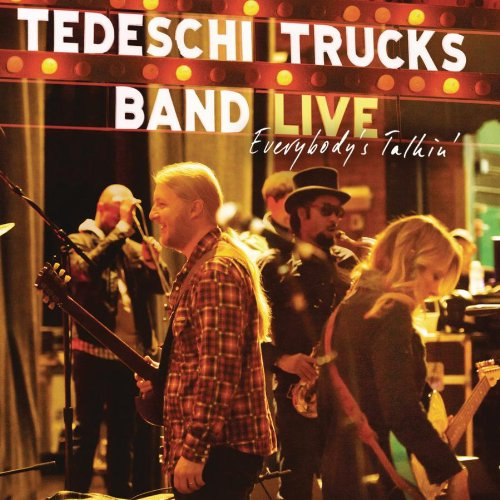
Tedeschi Trucks Band - Live - Everybody's Talkin'


Everybody's Talkin' is the second release by the husband and wife team of Derek Trucks and Susan Tedeschi, and their fine band. This double live album delivers on the full promise of this musical marriage born of a real life family affair. Featured is the same band, production team, and the same combination of blues rock, R&B, and instrumental experimentation that won the band the Grammy for Best Blues Album last year for their debut platter, Revelator. The first thing I thought of on my inaugural listening was recollecting the amazing synergy of Delaney & Bramlett as they were joined on the road by Eric Clapton in England back in the late '60s. There is just as much talent and energy here, and some of the same indulgence, as well.

Clocking in at just around the two hour mark, this record fairly faithfully replicates the experience of a Tedeschi/Trucks show, and while it's a great document for their audience, it may be the case of a bit too much, too soon. As a single disc, they may have pulled off the best live record of 2012 - as a two record set, the material wears a little thin - depending on mostly cover tunes, some nuggets from each of their previous pasts, and three songs from their debut. Mind you, the playing and singing is uniformly fabulous across the board, but the inclusion of an overly long drum solo, and a couple of tunes in which Tedeschi surrenders some mic time leads me to believe that they may have given a little more than they needed. Another album's worth of new material before a live outing may have justified a double CD release, but the spreading out of so much material over such a large territory renders what could have been an absolute blinder of a live album into merely a very fine document of a band developing into what could be greatness.

This may come off as sacrilege to their fan base, but, I've spoken to several listeners who share this opinion and expect that this band could well grow into something much bigger than we've yet seen from the reigning King and Queen of the blues. One of the trade offs I seem to be seeing in this new era of artist self direction is the discipline and marketing expertise that could be delivered by a strong producer, and an experienced manager.

Everyone's Talkin' starts things off, and the band brings some panache to the Fred Neil tune that Harry Nilsson's original hit version never imagined. Oteil Burbridge's bass line gets things moving around the second verse, and Susan Tedeschi's always excellent vocals are nicely embellished by a small horn section, and some fervent background singers. Oteil's older brother Kofi lays into his B-3 soon after, and Derek Trucks tears off a casual little solo that is perfect - thick and creamily toned, well played, and soulful. A nice introduction of what's to come.

Trucks takes center stage next, and meditatively spins out a gorgeous three minute intro to Midnight In Harlem (Swamp Raga Intro with Little Martha) that is as suggestive of Ravi Shankar as it is to the memory of Duane Allman. The young Southerner is one of the truly ascending masters of the slide guitar - I've recently had the pleasure of spending time and speaking with slide masters Ry Cooder, and Sonny Landreth, and as I listen to Trucks I wonder what it may be that draws such soulful, thoughtful, and musical mystics to the slopes of the slide. George Harrison brought the art of melodic slide playing to the world of the electric guitar when faced with his immersion into Indian music and the arrival of chops heavy guitar-slingers like Clapton, Hendrix, Beck, and Page, and ever since, the best proponents of the art seem to bring as much to the table as beings as they do as musicians. Trucks is the youngest of the breed, and quite possibly alongside Sonny Landreth, the most highly developed of these slide masters. His meteoric rise over the last decade has been most amazing, but I dare say, and hope - his best playing may lay ahead for him.

Susan Tedeschi then takes the reins for a sultry stroll through this tune that helped propel the band's first album to #12 on the Billboard 200 charts last year. The band is unobtrusively supportive, but don't let that comment fool ya - they play with a casual ease that almost masks a level of virtuosity which matches the legacies of so many great Southern Rock bands. Trucks lays down another brilliant solo that simmers along for a bit before escalating into a boiling tribute to the modal melodicism of Dickey Betts - Derek's tones are very thick and filled with pure tube amp overdrive. He makes it sound effortless, but to control the amount of horsepower necessary to produce this tonal torrent with a slide is akin to riding bareback on a rocket ship. This is the rock and roll equivalent to sorcery, or brain surgery - and the doctor is in.

Super solid ensemble playing is the way of the day on Learn How To Love, and the band cuts a huge pathway for Tedeschi to show off her well honed vocal gymnastics. Hubby pops in for a solo that tightropes its way up and down the neck of his acclaimed Gibson SG as he masterfully navigates bottlenecking and string skipping single note fingerings. Saxophonist Kebbi Williams gives Trucks some of his own medicine, first blowing a fairly straight solo that brings to mind Traffic's late '60s spark before he ventures a ways outside and gets a bit harmolodic with it. They then break things down into another Trucks trip that builds and builds before Tedeschi steps up with some tasty guitar chops of her own, leading to a satisfying session of husband and wife trading eights. Thrilling stuff.

It's rather amazing that with eleven people sharing the stage, things never get muddled, or overly busy, but this band is not just playing, they're also listening to one another, and embellishing as they accompany each other. It's clearly Trucks' show as the band's main soloist, but there is a huge amount of interplay going on all the time. The band's two drummers (Tyler Greenwell and J.J. Johnson) play like a well oiled machine, and are extremely complementary, as is bassist Oteil Burbridge and his keyboardist brother, Kofi. The horns are fantastic in their role - they bide their time, and when called upon, they flat out deliver, usually in a way that suggests a Soho jam session long after midnight.

Bound By Glory is another excellent tune off of the band's first release - Trucks brings it up to speed with a lovely bit of raga rock before Kofi Burbridge steps on the volume pedal of his Hammond B-3 organ, and leads the band into a tune that has classic stamped all over it. The organist takes the first solo that sees his bassist brother bouncing alongside enthusiastically until Trucks takes back the wheel, sending the band and the tune out to a sizzling conclusion.


A pleasant Bo Diddley beat rings in the blues standard, Rollin' and Tumblin' - it features more of the same outstanding playing, but it's something of a let down after the incredible head of steam the band has thus far built, and while this rendition is certainly a few steps ahead of what most bands could do with this tune, it is also a step behind what I expect from this crew. It's hell to hang out with greatness - it creates some very high demands and expectations!

Derek Trucks is so well immersed in Indian/Middle Eastern music that I feel pretty comfortable stating that he's steeped in it. Nobody's Free features yet more brilliant soloing that amply displays his affection and command for this idiom before he hands off to Kofi and his younger brother - the elder Burbridge brother takes his hands off his Hammond and uncorks a flute solo that is so incredible that you don't mind that it is a flute solo, while Oteil gives a lesson that shows why he has been the jam band/southern rock bassist of choice for the last few decades. Tedeschi's vocals are especially strong on this cut, as she reaches deep into her blues rock encyclopedia of chops and soul.

A gospel infused version of John Sebastion's Darling Be Home Soon gives the audience and the listener a chance to catch their breath, and enjoy the band in song mode. Even still, there is a relatively mindblowing solo from Trucks, and loads of inventive and interesting playing and singing.

Disc two of this package is where things slow down for me a bit. There's plenty of excellent playing and singing, but the tunes don't jump out at me with as much melodic oomph as I'd like, and honestly, I find the lengthy drum solo in the fifteen minute version of Stevie Wonder's Uptight to be a bit much without visual stimulus, or anything truly exceptional from the solo itself. When I recently saw the band, this tune was a high point, but it doesn't play as well for me with audio only. Chop the drum solo out, and maybe we have a different ending, but for me it weighs the whole thing down more than I would like.

Of course, at the amazingly low price of $10.88 (Amazon), one could say I have no place to complain, but I still think I might. I have been saying for several years that Derek Trucks is very close to becoming a much more significant artist than he already is - I have stated many times that I think he has an album in him that will completely overshadow what he has done so far. And, I think that by keeping this set to one CD, they may have actually ended up with a more impressive document. This is a fine, fine album, but again, I think some judicious chopping may have left them with a great listening experience from beginning to end which would have left us plenty sated, but still clamoring for more.

Tedeschi Trucks Band is one of the most powerful outfits filling theaters today - they've made an excellent second album, and I'm sure the best is yet to come. Stay tuned.

Special thanks to Michael Vernelle Lewis!


Monday, June 18, 2012

Johnny Hickman - Tilting - Buy It, Don't Steal It!


"I love writing songs in all capacities....throwing Lowery riffs that he builds a song around or writes words to my melodies, writing entire Cracker or solo songs on my own, all good. It's a little frustrating sometimes because understandably, people first regard me as just the lead guitarist when in truth I co-wrote the bulk of the Cracker canon with David Lowery, including every radio hit. Keith Richard, Mike Campbell, Joe Perry....we all get pigeonholed that way. Goes with the guitar-slinger territory." Johnny Hickman on being not 'just' a lead guitarist.

Tilting is Johnny Hickman's second solo sojourn, a trip that sees the veteran songsmith/guitarist/singer weaving in and out of a wide variety of styles without ever forgetting where his roots lie. Recorded in Colorado with producer/engineer/multi-instrumentalist Jason Larson, the record is most definitely a modern affair - largely funded by friends, family, and fans via a very successful Kickstarter campaign, only to be instantly pirated by wretched download sites who somehow managed to get their hands on a promo copy. It is the best of times, it is the worst of times, it appears.

If you find yourself thinking that this disc harkens back to the genre jumping employed so successfully by the mid-period Beatles, you're not mistaken. Mind you, there's more than enough Cracker soul to keep his core constituency smiling (such as the album's excellent opening track, Measure of a Man), but there's also a smoky, sophisticated trip to French bistro music on the 'keep the home fires burning' Papa Johnny's Arms, which features a beautiful jazzy chord progression, a lovely Django-esque guitar solo, and some clever and warm wordplay.

Dream Along With Me is a piano based mid-tempo burst of '70s melodicism that evokes fond memories of Eric Carmen, The Raspberries, and even Paul's Wings - not what one might expect, but a delightful surprise, especially the angelic background vocals, and a guitar solo that surely has the mystic George smiling from above. Then there's a slab of pop entitled Sick Cynthia Thing that sits comfortably somewhere between Elvis Costello, Guided By Voices, and The Sweet. We're talking seriously eclectic stuff here, but it works in a way that only a seriously skilled writer could pull off. Someone who's listened to as many great records as he's made.
“I sometimes feel like the impassioned madman with his lance trying to slay the windmill monsters,” Johnny reveals. “I think a lot of people do in these troubled times. The idea of battling these mighty, unbeatable foes both real and imagined is disturbing yet darkly amusing to me.”

He continues, “The songs on Tilting are definitely more personal, more autobiographical than on either Palmhenge or Cracker records. I didn’t set out to do that but it’s just where I am in life I suppose. I didn’t steer cautiously around any of my feelings or experiences, good or bad. It’s as honest as hell, I can tell you that. Lyrically, there’s a little mid-life crisis catharsis going on here, not that that’s a bad thing. That and just being pissed off and reveling in it. I also love collaborating, which I do with David as well as my long time friend Chris LeRoy. Two of the twelve songs on Tilting were written by or with Chris, though the majority of these songs are directly from my head and heart.”
Not Enough is a pissed off picture of what this country is going through, but even as he's taking those who see no problem in the way our nation is behaving to task, Hickman makes it sound like we'll be just fine. His witty lyrics never pander to the those who would give up without a fight, or to those who would call for in the streets revolution. No, there's a sense of staying the course and being a man, taking it as it comes and making it all work out. Maybe even more than the tasty melodicisms and the cooler than cool arrangements, what I like about this record is that like The Who, The Kinks, and The Beatles, this guy is not gonna quit, and he's never going to whine. Stick with him, watch what he does, follow hid lead, and you'll be fine, too.

Hickman's voice is exceptionally strong throughout the album, whether it's standing nakedly by itself on the barroom lament, Drunkard's Epiphany, or shouting over the power pop/punk of Takin' Me Back. Of the great '90s rock and roll sergeant-at-arms (Mike Campbell, Peter Buck, and Doug Gillard come to mind), Hickman is the first to stand tall and produce a solo album strong enough to stand alongside his day job's finest. Any song on this disc would sit proudly smack dab in the middle of a Cracker album, the same thing that I said about David Lowery's outstanding 2011 solo outing, The Palace Guards.

World weariness occasionally appears, as it will when the times sees one losing friends to the psychic wars, and the ravages of an industry that left town. Whittled Down is a tale of the rigors of the road, but I'm also hearing the somber souls of Vic Chesnutt and Mark Linkous looking down on Lonesome Johnny from some celestial tavern. This is a new form of the working class hero - he's the guy left behind to pick up the pieces and keep on moving. Hickman honors his friends living and dead, his bandmates, and his family with his deep vein of dignity and integrity. His is the job of the living and the leaders - the survivors. And he's doing a damned fine job.

I had the pleasure of hanging out and talking with author Joe Klein (Primary Colors) and legendary guitarist Ry Cooder the other night - we talked of music, politics, and the state of the nation. Ry seemed a little pissed, and somewhat concerned that I had already heard the whole of his new record, which is still months from its release date (I assured him I had heard it through legitimate means). Klein listened intently as the working class of Dayton. Ohio told him their take on America. As I listen to this record that Johnny Hickman has just made, read the impassioned words of Hickman's partner in Cracker David Lowery as he attempts to steer the music industry and its customers into sensible waters, and recall the conversations with Klein and Cooder, my level of anxiety and angst about this old world finds itself easing down a bit. It's artists like these who remind us of not just who they are, but who we are - and in a damned fine, entertaining fashion. It tenders and engenders hope, and it gives strength.

Another Road brings the album to a finish, and it does so in the finest of fashions. Its staccato, tremolo'd guitar intro reminds me that rock is the voice of reason - one of power, redemption, and salvation. It reminds me of The Who at the height of their powers, when Townshend's anger unleashed itself in the only way that makes sense - with loud rock and roll guitars, and a song that makes one wish to move forward, and upward.

Tilting is a damned fine record. There are many other great songs and moments on this platter that I haven't mentioned, but I will allow you to discover them for yourselves. Hickman has set the bar high and hurdled above and beyond it. Now, you can do me a favor. Buy this album - don't steal it. Pay the artist, for without the artist, nobody else gets paid, in fact, nobody else in the music business has a job without the artist. And go out and see Cracker this summer as they tour America with Barenaked Ladies, Blues Traveller, and Big Head Todd and The Monsters, as part of The Last Summer On Earth 2012 Tour.


 Finally, I'll leave you with Hickman's words of wisdom:
“Personally, all my favorite records and bands have been those that don’t flatline into one tiny sub-genre (Beatles, Kinks, Radiohead, Petty, Neil Young…). When I write, I just do it and don’t worry about it. As David [Lowery] and I always say, the only real rule in music is ‘don’t suck.’”
Tilting release date - July 3, 2012
 http://johnnyhickman.com
 http://www.crackersoul.com/fr_home.cfm

Great thanks to Johnny Hickman, Jason Larson, and the ever helpful Tony Bonyata at Pavement PR. 

Sunday, June 17, 2012

Leslie West Live At The Iridium!

I had a chance to watch the first of three shows that Leslie West played last week at The Iridium in New York City last Monday night via the club's live web cast, and it was a stunning return to the headlining stage for the (Don't Call Me Legend) legendary six stringer.


Accompanied by the incredible Rev Jones, armed with his Dean Custom signature series six string bass, and drummer Bobby Rondinelli (Rainbow, Scorpions, Black Sabbath, Blue Oyster Cult), West brought the magic in spades. In spite of some technical snafus caused by some unexplainable guitar technician related issues (I'm hesitant to blame the tech because I wasn't there, and it's not my gig to point out blame) Leslie gave the crowd a thrilling night of incredible guitar playing, soulful singing, and his usual graciousness and good humor.


The thirteen song set was filled with West classics, and several covers, including the passionate set opener People Get Ready and the Bob Dylan penned Blowin' In The Wind off of the 2011 Mountain album Masters of War (an incredible disc if you've never heard it). The highlight of the set for me was one of the finest renditions I have yet heard of Jack Bruce's Theme From An Imaginary Western originally recorded for Mountain's first album in 1970. Of course, the guitar playing and tone were as exemplary as always, but it was West's moving vocals that captured me on this evening. His vocals seem to get better and better with the passage of time!

West's latest album, Unusual Suspects, was represented by the rocking To The Moon, and the set closing Turn Out The Light. Recorded shortly before the Mountain man was temporarily slowed by the amputation of his right leg in June of last year, the album was a high point of 2011 - West put on the performance of his career, and the production and bass playing by Fabrizio Grossi, along with the powerhouse drumming of Kenny Aronoff made for a fabulous record. Even superstar cameos by Joe Bonamassa, Slash, Zakk Wylde, and Steve Lukather could not deflect the light of West's remarkable musicianship.

Leslie at one point in the show warmly addressed Les Paul Junior from the stage, and laughingly asked that the guitar that West brought to such fame (the Gibson Les Paul Junior) not be compared with his Dean signature model. I've seen Leslie play a lot of guitars over the years, and I am a huge fan of the venerated Les Paul Jr., but I can honestly say that the tones he is getting from his new Deans and his Blackstar amps are definitely the best of his career.


It is a huge thrill to have Leslie West back on the boards, and if you get the chance, don't miss him on this summer's Classic Rock and Blues Tour, featuring West, Johnny Winter, Edgar Winter, Rick Derringer, and Savoy Brown's Kim Simmonds. This should be one helluva show.

I have to be honest. This show brought tears of joy to my face. Congratulations, Leslie.

Friday, June 15, 2012

A Ry Cooder Sighting And Sonny Landreth Live!

Ry Cooder, "Sonny's playing around here, tomorrow? Where? Man, I'd love to see him, it's been a while. Cincinnati, huh? Boy. I'd really love to make it down there! If I don't make it, please be sure and tell him I said hello, and that I send my best regards."
Sonny Landreth, "You saw Ry last night? Where? I tell ya, he is The Master. It's been quite a while since I've seen him! Man, I sure wish he could have come down. Anyway, that's some good mojo!"

Author/columnist Joe Klein, "This is not business as usual, and I'd love to hear more about the last mayor of Dayton"

A friend sent me a message that I instantly read as cryptic. So cryptic, I couldn't understand it:

"Dude. Ry Cooder. Secret show. Trolley stop. Tonight. 9pm."

To read this note as anything but cryptic seemed a bit unreal. The Trolley Stop is a local tavern that features local music and on very rare occasions, a national act. In fact, even they haven't yet mentioned yet on their Facebook page that on a quiet Wednesday evening in June that not only did one of the greatest American musicians of all time stop in to play a few sets, but that he was accompanied by one of America's most read and revered authors, Joe Klein (Primary Colors' Anonymous).

I called my friend, local guitar wizard repair man and player extraordinaire Christopher Wright, and asked what he meant in this missive. Hell, I'm no cryptographer, I sometimes miss the very writing upon the wall. Turns out that as usual, I had it a bit askew. He meant just what he said. It turns out that Ry is just on the road hanging out with his friend Joe. The author is conducting a road trip across America. In the words of Time Magazine:

"Following previous years’ journeys from New York to Los Angeles and from Texas to Iowa, Joe Klein has once again hit the road to find out what people are thinking outside the Beltway. This time he’s traveling up the East Coast from North Carolina, across the Rust Belt and winding up in Minnesota—though, in true road trip fashion, the route could always change.

Along the way he’s meeting with politicians and community leaders, as well as readers who have invited him into their homes and businesses to talk about how they’re faring in these difficult times. And a few special guests are joining Joe as he meanders through the Heartland."

I sat and spoke with Joe (whose name I didn't yet know - he said he was a friend of Ry's) for a few minutes, and I listened as he talked with some local musicians, who would soon be joining Cooder onstage, about the current state of America. What impressed me most was how Klein listened when the musicians spoke. He never pontificated, and he appeared totally absorbed, and completely engaged.

As I stated earlier, I'm occasionally a little slow on the uptake. It had not yet been explained to me that this was The Joe Klein, a guy who has sold more than enough books to fill a library. He had written a novel so dangerous as to deny being its author for quite some time (1996's Primary Colors; A Novel of Politics, based on the 1992 Democratic presidential primary - estimated sales 3 million), a fellow who had been regularly employed by the world's largest publishers, starting with Rolling Stone Magazine as a contributing editor in 1974. In fact, it was his tour on that had placed Cooder in our musical laps for the evening. And here I thought that Ry's friend was just a very bright perceptive fella named Joe.

Here's what Joe had to say about the evening in his blog for Time Magazine's 2012 Swampland coverage of the presidential election:

"Well the big event yesterday was watching the great Ry Cooder jamming with one of his discoveries, a retired meter reader named Dan Gellert - a brilliant country fiddler and banjo player - at the Trolley Stop in Dayton, Ohio"

Dan Gellert is indeed a brilliant musician. After the show I asked how he had come to know the renowned Cooder. He explained that in the usual fashion, his music had been passed along to Ry by Gellert's daughter at Mike Seegers funeral. The astute ethnomusicologist had liked what he heard and called Dan up and asked if he'd enjoying jamming a bit when Ry came to Ohio. Dan agreed, and the die was cast. The veteran fiddler supplied the tunes, some great fiddling, a bit of plucky banjo work, and a vocal style that fit like a pair of well worn work boots. Cooder did as he always does, and unobtrusively became an organic part of the music. He played an ancient Gibson L series guitar that had been generously supplied by the neighboring picking parlor, Recreate.

Everyone had a great time, and Cooder and Klein seemed to have successfully completed their mission of a night out with some libations, some music, and lots of good conversation.

The first thing I had said to Ry had been, "You know, I thought Sonny Landreth was gonna be the only great slide player I'd be seeing this week!"


Last month, I stated here that Sonny Landreth's new album Elemental Journey was the veteran guitarists' best album ever, and maybe the best instrumental guitar album of 2012. I had a chance to see Landreth live last night at Cincinnati's 20th Century Theater and the show shone as brightly as the new record.

Accompanied by bassist Dave Ranson, and drummer Brian Brignac, Landreth wooed the capacity crowd with another master class on slide guitar. Combining an intoxicating stew of Cajun/Zydeco, rock and roll, blues and a sensational sense of harmonic sophistication, Landreth held the crowd in a hand for the almost two hours, and the crowd adored him.


Classifying Landreth's heady mix has never been easy, and with his latest album he has upped the ante by going all instrumental and incorporating strings, steel drums and guest cameos by heavy hitters Joe Satriani and Eric Johnson. The cool thing about this is that it is one fabulous ride, even if you can't quite give it a name. Landreth and band absolutely smoked on the tunes from the new record, even without the strings, Steve Conn's great keyboard work, and the superstar sidemen. His rhythm section was on fire - Brignac is a whirling dervish of a drum, with rock horsepower and brilliant versatility; Dave Ranson has been sharing stages with Landreth for over twenty years, and he is both solid and adventurous. One of the joys of listening to Landreth's phenomenal guitar histrionics is in hearing how fast he can change directions, and going along for the ride as he howls one moment, whispers the next, and then seems to inexplicably do both simultaneously.


 Had Hendrix ever seen Sonny Landreth, the Seattle sensation may have had a similar reaction to Landreth's otherworldly technique as did Townshend, Beck, and Clapton to Jimi. He may have just wanted to quit. He wouldn't have, but for a moment there would be that recognition of the fact that no one can do what this man is doing. The question of who is the world's greatest slide guitarist is a stupid question. There's the ever incredible Derek Trucks, his band mate an fellow Duane disciple Warren Haynes, and the aforementioned Ry Cooder, just to name a few. Of the bunch, no one does quite what Landreth does - his style is honed of genius. No one before him did quite what he does, and no one seems to have come even close to approaching an approach to his combination of slithery slide and sure fingered fretting. I won't even go into the proficiency of the man's right hand. But, I will say that watching and listening to this fine Southern gentleman had me giggling like I did when my heroes would amaze my young ears at fifteen, and that doesn't happen too often. Thanks, Sonny.

After the show I had a chance to chat with Sonny, and even after just walking off stage after a whiz bang, non-stop performance, he was warm, kind, and gracious. I told him that Ry Cooder had really wanted to come down and see the show, and Landreth seemed both genuinely humbled and pleased. That's something that I got from both Sonny, Ry, and Joe Klein this last week - they are where and who they are because they are genuinely nice people, on top of being consummate professionals. Each gentleman does his job in a fashion few are able, and they were all extremely unselfish in their approach to others. We can all learn from men such as these.

Thanks to Sonny Landreth and his band, Ry Cooder, Joe Klein, Christopher Wright, Jay Madewell, and the good folks at Conqueroo PR (Cory Baker and Julie Arkenstone).

Monday, June 11, 2012

Spectrum Road - The Smile on Tony Williams' Face

Veulta Abajo is a brilliant place for Spectrum Road to start their debut album. One of the heaviest rocking pieces of jazz fusion that ever was etched onto vinyl, the tune could easily be mistaken for a King Crimson outtake that got lost on its way through the big top of a passing circus. In paying tribute and homage to The Tony Williams Lifetime, Spectrum Road throws down the gauntlet as Cindy Blackman-Santana unleashes a dizzying drum roll that careens down the straightaway, splitting apart the furious molten metal riffing provided by Vernon Reid's Fripp-a-licious guitaring, John Medeski's howling Hammond organ, and the unstoppable Jack Bruce's bludgeoning bassline. This band is fearless - this record is fantastic. Filling the rather large footprint of Tony Williams' stick work is no mean feat, but from beginning to end, Blackman-Santana drives this band relentlessly with endless chops, sophistication, and a go for the throat energy that leaves one breathless, and smiling.


Born of a conversation almost ten years ago between Reid and Bruce, Spectrum Road started out as a tribute to Williams, but has grown into an entity of its own - Williams' tunes are the guidepost, but while they provide a basic frame, the album is an endless array of brash improvisations, solos, and a sense of accompaniment that always pushes the soloist to push themselves to the outer limits of their huge skill sets. Vernon Reid makes no particular effort to replicate John McLaughlin's original guitar parts, instead, he's simply being himself - at times reminding the listener of the super effected, turbocharged leads that brought him to fame with the woefully underrated Living Colour, and then at times he sounds like the best jazz saxophonist in decades. Where McLaughlin's playing on Lifetime records suggested psychedelia, Reid's suggests extraterrestrials.

Photo by Marek Hofman
Immediately after wrapping up the whirlwind of the first cut, There Comes A Time shows Jack Bruce in amazing voice as the band unveils a sleek slow blues that dances sensually through the extended intro - except for Blackman-Santana. She sounds like a cat on a hot tinned roof, playing perfectly, but in an anything but in an expected manner. As Reid plays some of the most restrained, melodic single string work of his career, the drummer is an acrobat on a bet - a thrill at every turn, but with a sense of surefooted confidence. At the young age of 69, Bruce has never been busier, and has never been more in command of his talents. He's not doing a lot of singing on this record, so when he does you are thrilled as he sounds as if he's lost not a note, and his bass playing is adventurous as ever.

Next up is Going Back Home, based on a Jan Hammer tune, Coming Back Home, from Williams' 1978 album, The Joy of Flying. This would be a fairly standard piece of melodic fusion were it not for the virtuosity on display. Everyone takes a few turns, and this becomes much more than just a pleasant melody. It wonderfully reflects the maturity of these players as they unleash otherworldly chops, and yet manage to not step on one another's toes, or ever seem overly busy. Even as Reid toggles between stating the melody in myriad of subtle variations and some splendid torrents of 64th notes, he does so with an understated grace - something most guitarists will ever comprehend, let alone emulate.

Where finds Blackman-Santana scatting in a stoney Nancy Sinatra sort of way for the first three minutes as Medeski and Bruce weave a web under her tribute to Tony Williams fantastic drumming. Then Vernon Reid brings in some Mid-Eastern flavored fusion that suggests what may have come from Al DiMeola mind melding with Jimi Hendrix. Vernon delivers loads of notes, some sensational swagger, but also some bluesy bends and otherworldly squalls. After Reid pontificates for quite some time, he steps aside and Medeski cuts loose with the gnarliest B-3 solo that I have heard in a great many years. This is a full metal jacket only affair - Reid lays down some incredibly heavy rhythm guitar work, and the keyboardist gets out every hard rock dream he's ever dreamt. At the eleven minute mark, Cindy is back with her rap, and the band takes a minute and a half to come down from a trip that sounds better than anything that went down at Woodstock. This is jazz-rock grown up, and it is Good.

Sounding like a hybrid of Scottish, Indian, and inter-galactic space rock, An t-Eilan Muileach (Isle of Mull) is a Jack Bruce raga meditation on a Scottish classic, sang, of course, in Gaelic. Sitting roughly at the album's midpoint, one could hardly ask for a more thoughtful and pleasant respite. Never so meditative as to become sleepy, again it demonstrates the remarkable musical maturity on tap here.

Cindy Blackman-Santana is often referred to as a Tony Williams acolyte. She has spent untold hours ingesting the master's lessons and has absorbed the teachings and applied them to her own musicianship. Vashkar, the Carla Bley tune from Lifetime's 1969 Emergency album is a number that the drummer has covered on many previous occasions, and this time around it would appear that she has taken it as far as it can be taken. Once again, Vernon Reid is spectacular. The note count alone on this song is astronomical, but he's always exciting and interesting - he never disappears into repetition, or lethargy, largely due to the poking and prodding of three of the heaviest hitters in history keeping him on his toes and moving. Medeski then takes the helm and proceeds to raise the roof with soulful, and exciting Hammond wizardry. This may be one of the few bands on the planet that can make you turn your head away from Jack Bruce, if only for a few minutes.

Bruce returns to the past for One Word, which he originally recorded with Williams in 1970 after he had left the luxurious, but stressful environs of Cream. What's amazing is how much better his voice sounds here than in did 42 years ago. There is more dynamism and energy, as well as straight fire power. I don't know how Bruce has managed to make such a tremendous comeback from a life threatening liver transplant just eight short years ago, but I am ever so grateful to still have him here and making such music. I can't see where this record is much less earth shattering than Cream's were in their day.

When was the last time you heard a mellotron solo? I don't know that I ever had until the original improvisation, Tillmon's Blues, named for Tony William's father a jazz saxophonist, who took Tony to Jazz clubs and had the boy sitting in with the bands by the time he was eleven years old. Not much different is the story of Cindy Blackman-Santana, who discovered the drums at a pool party in her hometown of Yellow Springs, Ohio when she was just seven years old. She simply sat down, started playing, and has never stopped. While she is certainly not a carbon copy of Williams' playing, she has absorbed the essence, the musicality of his musicianship, and that has allowed her to make this music her own. She's definitely bringing more of a rock and roll hammer to the show, and it fits beautifully.

Allah B Praised features the band wearing their rock and roll shoes again, and they maintain a blistering pace for over four minutes of musical daredevilry. It amazes me to hear a superstar such as Bruce functioning strictly as the bass player, and knocking the ball clean out of the park. I always get miffed when someone accuses a star such as, say, Paul McCartney, of laying back, or holding his best licks for his own tunes - time and time again, this is simply not true (listen to Paul's work on Something, or Lennon's Come Together!). Bruce is always a beautiful part of Spectrum Road's rich tapestry.

Spectrum Road ends the second step their journey with a thoughtful and melodic rendition of Wild Life, the only tune they take on from the Allan Holdsworth edition of Lifetime. Vernon Reid rides this out with the magnificence he has displayed throughout the album. I'm not sure where musicians of Reid's rank size up in the eyes of a strange new music business, but two words that should come to mind are virtuoso and superstar. His playing is shining more than it ever has, and he generally shoulders the melodies for this troop. His soloing is sublime, as is John Medeski's.

I can't imagine that this won't lead to another record, and I'm hoping that if there is another, that it will be filled with originals. It's very clear that Spectrum Road has a magic that far exceeds their initial premise. Every member plays as well, if not better than they ever have.

Jack Bruce? Well, don't get me started. The guy seems to be getting better by the moment, having seemingly found the fountain of musical youth and genius. The man is a true inspiration.

At the end of the day, this just might be Mrs. Santana's album. I don't know of any other drummer who has laid it down quite like this in some time in this realm. A magnificent performer, and performance.

Great thanks to Spectrum Road, and Kevin Calabro at Calabro Music Media.